
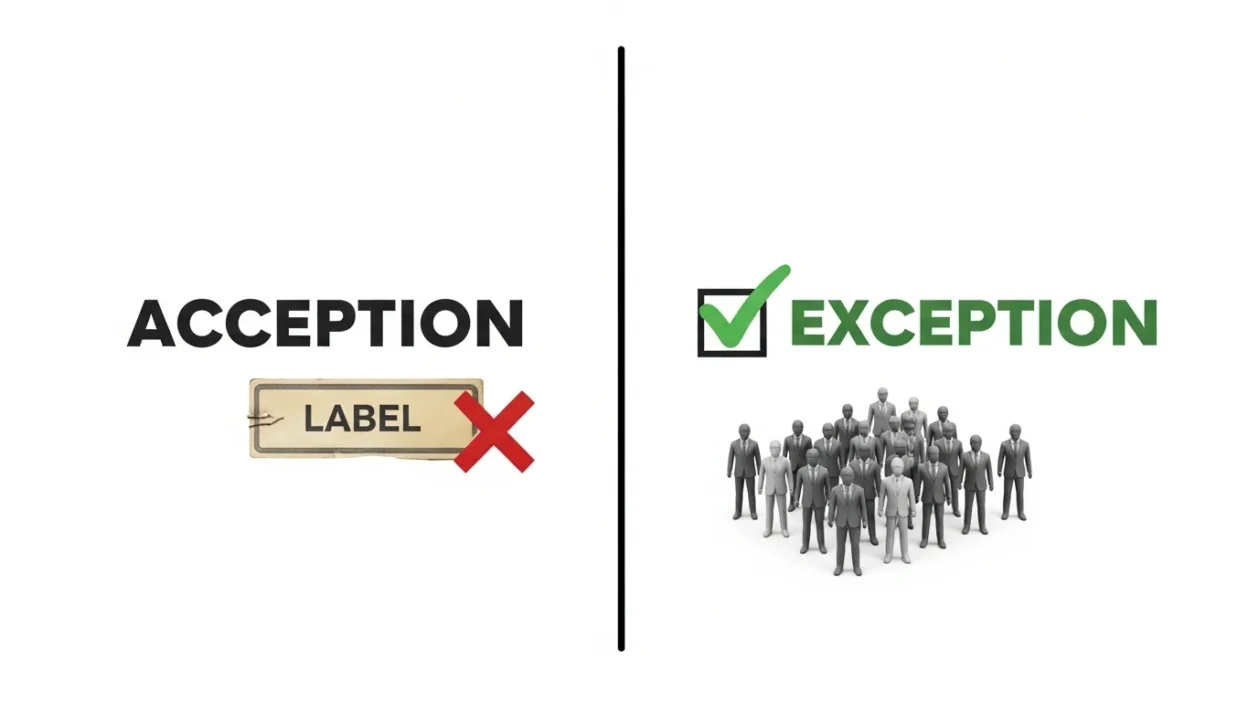
The words acception and exception look similar, but they are not interchangeable.
One is extremely rare and outdated, while the other is commonly used in everyday English. Because of their similar spelling and pronunciation, many people confuse them in writing.
If you want clear, correct English, it’s important to understand which word to use—and when.
Quick Answer
- ✅ Exception = Correct and commonly used word
- ⚠️ Acception = Rare, outdated, and almost never used
In modern English, you should almost always use exception.
What Does “Exception” Mean?
Exception is a noun that means something that does not follow a rule or is excluded from a general statement.
It is widely used in both formal and informal contexts.
Examples of “Exception”
- Everyone passed the test, with one exception.
- This rule applies to all students, without exception.
- She made an exception for her best friend.
- There are no exceptions to this policy.
In each case, exception refers to something that is different from the general rule.
What Does “Acception” Mean?
Acception is a very rare and outdated word. It historically meant the way a word is accepted or understood (its meaning or sense).
However, this usage is obsolete in modern English, and most people never use it.
Example (Rare/Obsolete)
- The word has a different acception in this context. ⚠️
In modern writing, this would usually be replaced with:
- The word has a different meaning in this context. ✅
Why People Confuse Them
The confusion happens because:
- Both words look similar
- Both share a similar sound
- People confuse exception with accept/acceptance
But remember:
- Exception → Related to excluding something
- Acception → Rare and outdated
Quick Comparison Table
| Word | Meaning | Usage |
|---|---|---|
| Exception | Something excluded from a rule | ✅ Common |
| Acception | Meaning or sense (obsolete) | ⚠️ Rare/Outdated |
Common Mistakes to Avoid
Incorrect:
- Everyone agreed, with one acception. ❌
Correct:
- Everyone agreed, with one exception. ✅
Incorrect:
- There are no acceptions to this rule. ❌
Correct:
- There are no exceptions to this rule. ✅
In almost every case, you should use exception.
Easy Memory Trick
Think of this:
Exception = EXcluded from the rule
Both words start with “ex”, which helps you remember that it means something is left out.
American vs British English
There is no difference between American and British English for this word.
- Exception is standard in both
- Acception is considered outdated everywhere
Frequently Asked Questions (FAQs)
Is acception a real word?
Yes, but it is very rare and considered outdated in modern English.
What does exception mean?
Exception means something that does not follow a rule or is excluded from a general statement.
Should I ever use acception?
In modern writing, it’s best to avoid acception and use “meaning” or “sense” instead.
Why do people confuse acception and exception?
Because they look and sound similar, and people mix them up with words like “accept” and “acceptance.”
Is exception used in formal writing?
Yes. Exception is commonly used in both formal and informal contexts.
What is a synonym for exception?
Common synonyms include exclusion, anomaly, and irregularity.
Final Thoughts
The difference between acception and exception is clear once you understand their usage. Exception is the correct and commonly used word, referring to something that is excluded from a rule or general statement. On the other hand, acception is an outdated term that is rarely used in modern English.
To keep your writing clear and professional, you should almost always choose exception. A simple way to remember this is to connect exception with “exclude.” If something doesn’t follow the rule, it’s an exception.

Narelle Merindah is a passionate author committed to delivering thoughtful, engaging, and well-structured content. With a keen eye for detail and a love for storytelling, Narelle creates informative articles that resonate with readers. Her dedication to clarity, creativity, and authenticity ensures meaningful and impactful writing.