
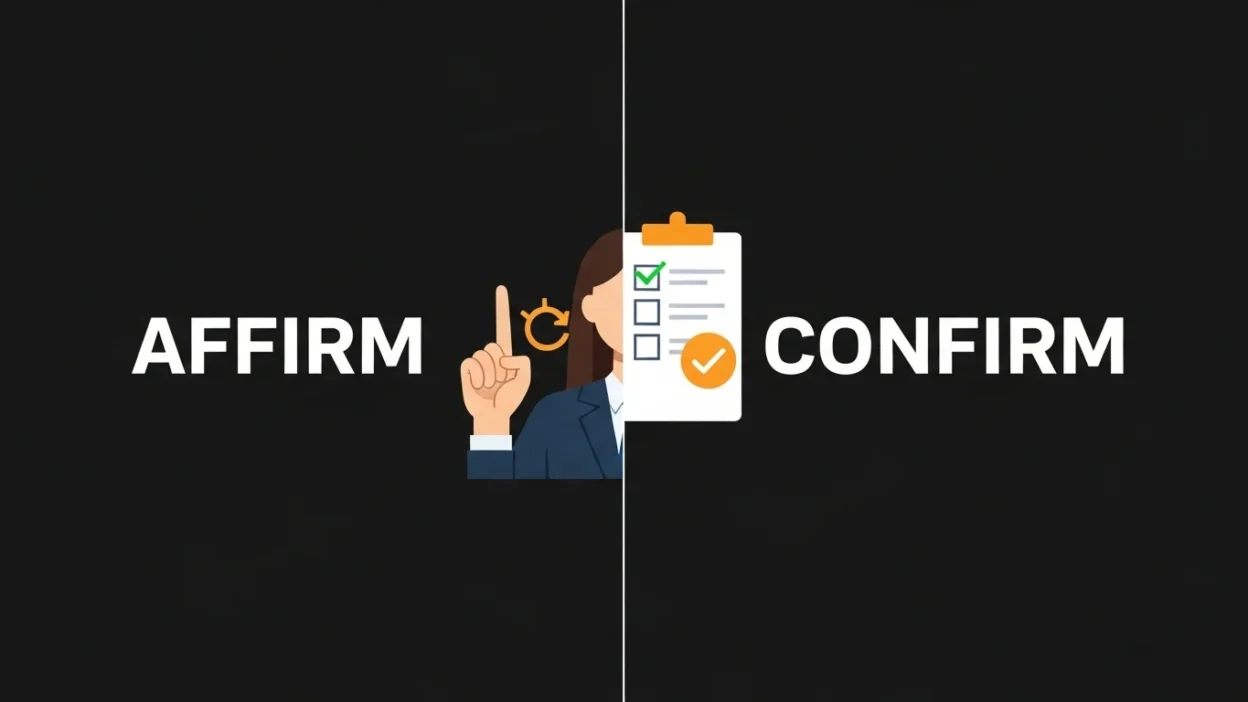
The words affirm and confirm are often used in similar situations, especially when responding or agreeing.
However, they are not the same. Each word carries a slightly different meaning and tone, which can affect how your message is understood.
If you’ve ever wondered which one to use in emails, conversations, or formal writing, this guide will make it clear.
Quick Answer
- ✅ Affirm = To state something as true or express strong agreement
- ✅ Confirm = To verify or make sure something is correct or certain
In simple terms:
Affirm = express belief or agreement
Confirm = check or verify facts
What Does “Affirm” Mean?
Affirm is a verb that means to declare something confidently as true or to express agreement or support.
It often carries a strong, positive, or formal tone.
Examples of “Affirm”
- She affirmed her commitment to the project.
- He affirmed that he would attend the meeting.
- The court affirmed the previous decision.
- They affirmed their support for the policy.
In these cases, affirm shows confidence, belief, or strong agreement.
What Does “Confirm” Mean?
Confirm is a verb that means to verify, check, or make sure something is true or correct.
It is commonly used in everyday communication, especially in emails and scheduling.
Examples of “Confirm”
- Please confirm your attendance by Friday.
- I called to confirm the appointment.
- The email confirmed the booking.
- Can you confirm the details?
Here, confirm focuses on accuracy and certainty.
Key Difference Between Affirm and Confirm
The difference lies in purpose and tone:
- Affirm → Expresses belief, agreement, or support
- Confirm → Verifies facts or checks accuracy
Quick Comparison Table
| Word | Meaning | Use Case |
|---|---|---|
| Affirm | Declare or agree strongly | Formal statements, support |
| Confirm | Verify or check correctness | Appointments, details, facts |
Common Mistakes to Avoid
Incorrect:
- Please affirm your booking. ❌
Correct:
- Please confirm your booking. ✅
Incorrect:
- He confirmed his belief in the idea. ⚠️
Better:
- He affirmed his belief in the idea. ✅
Using the wrong word can make your sentence sound unnatural.
Easy Memory Trick
Think of it this way:
- Affirm = A for Agreement
- Confirm = Check for correctness
This simple trick helps you choose quickly.
When to Use Each Word
Use “Affirm” When:
- Expressing belief or support
- Making formal or strong statements
- Agreeing confidently
Use “Confirm” When:
- Verifying information
- Checking details
- Responding to requests
American vs British English
There is no difference between American and British English for these words. Both use affirm and confirm in the same way.
Frequently Asked Questions (FAQs)
What is the difference between affirm and confirm?
Affirm means to declare or agree strongly, while confirm means to verify or check something.
Can affirm and confirm be used interchangeably?
No. They have different meanings and should be used in different contexts.
Which word is more common?
Confirm is more commonly used in everyday communication, especially in emails and scheduling.
Is affirm more formal than confirm?
Yes. Affirm often sounds more formal and is used in legal or official contexts.
Can I use confirm in professional emails?
Yes. Confirm is widely used in professional communication.
What is a synonym for affirm?
Common synonyms include declare, assert, and support.
Final Thoughts
The difference between affirm and confirm may seem small, but it plays an important role in clear communication.
Affirm is used to express belief, agreement, or support, often in a formal or confident tone. In contrast, confirm is used to verify information or ensure something is accurate.
In everyday situations like emails, bookings, or appointments confirm is usually the right choice. When making strong statements or expressing agreement, affirm is more appropriate.
By remembering that affirm is about agreement and confirm is about checking, you can use both words correctly and confidently in your writing.

Narelle Merindah is a passionate author committed to delivering thoughtful, engaging, and well-structured content. With a keen eye for detail and a love for storytelling, Narelle creates informative articles that resonate with readers. Her dedication to clarity, creativity, and authenticity ensures meaningful and impactful writing.