The words “girlie” and “girly” look almost identical, but they don’t always feel the same in tone or usage.
Many writers use them interchangeably, yet there are subtle differences in meaning, context, and style.
If you’re writing for a blog, social media, or SEO content, understanding this difference helps your content sound more natural and professional.
Let’s explore the full difference between girlie vs girly, with examples, tone explanations, and FAQs.
Quick Answer: Girlie vs Girly
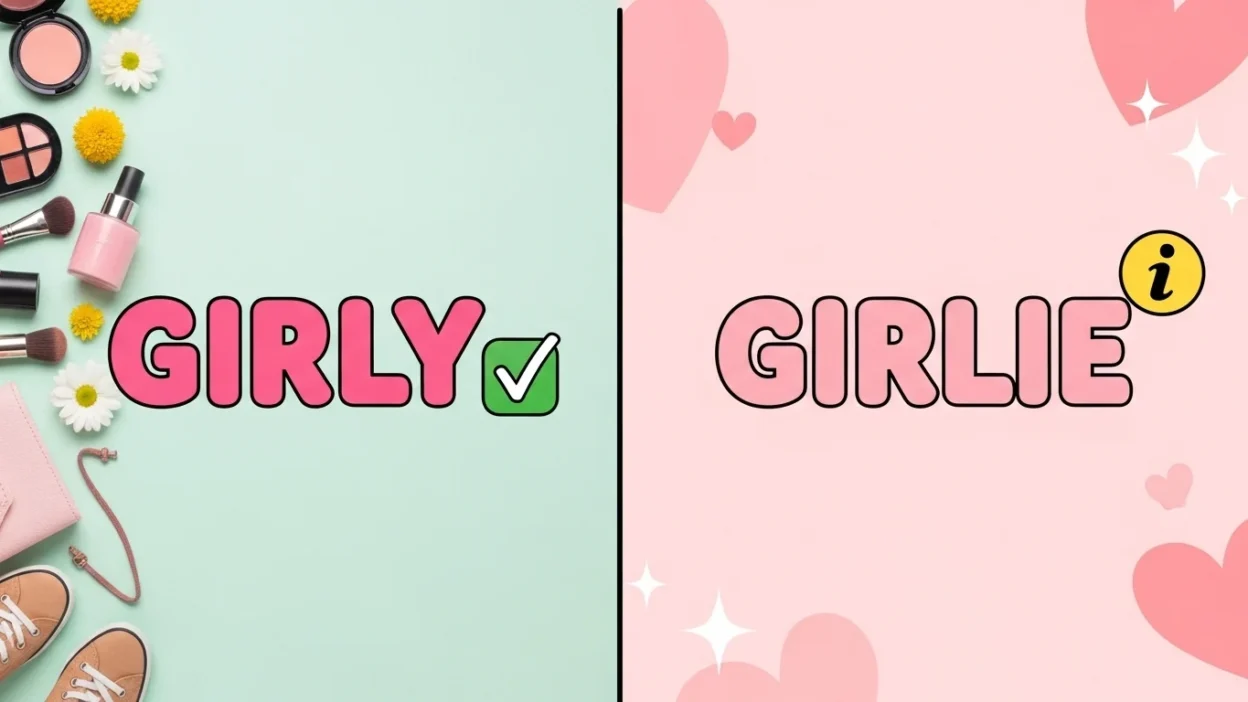
- ✅ Girly = Standard and widely used adjective
- ⚠️ Girlie = Informal, playful variation
Both words are correct, but girly is more common and more accepted in standard writing.
What Does “Girly” Mean?
Girly is an adjective used to describe something that is traditionally associated with girls or femininity.
It often refers to:
- Fashion styles
- Colors (like pink or pastel tones)
- Hobbies or interests
- Personality traits
Examples of “Girly”
- She loves wearing girly dresses.
- The room has a very girly vibe.
- That’s such a girly color.
The word is neutral in tone and commonly used in everyday English.
What Does “Girlie” Mean?
Girlie is a more playful, cute, or affectionate version of “girly.”
It is often used:
- In casual conversation
- As a nickname
- In social media captions
- In a flirty or friendly tone
Examples of “Girlie”
- Hey girlie, how are you?
- That’s such a girlie outfit!
- Let’s have a girlie night!
“Girlie” feels softer, cuter, and more informal.
Tone and Usage Differences
Here’s where the real difference shows.
| Word | Tone | Common Usage |
|---|---|---|
| Girly | Neutral / descriptive | Fashion, design, personality |
| Girlie | Playful / affectionate | Text messages, captions, nicknames |
If you are writing a professional article or product description, girly is usually the safer choice.
If you’re writing Instagram captions or friendly messages, girlie works well.
Is One More Correct Than the Other?
No. Both are grammatically correct.
However:
- Girly is more standard and dictionary-friendly.
- Girlie is more casual and expressive.
In SEO or blog content, “girly” tends to perform better because it’s searched more frequently.
Cultural and Modern Usage
In modern language, both words can carry different meanings depending on context.
Sometimes “girly” is used positively to celebrate femininity. Other times, it may be used stereotypically.
Similarly, “girlie” is often used affectionately among friends but could sound dismissive if used incorrectly.
Context matters.
Common Mistakes to Avoid
1. Using “Girlie” in Formal Writing
Avoid using “girlie” in professional emails, academic writing, or serious articles.
2. Overusing Either Word
If you repeat “girly” too often in content, it can sound unnatural. Use synonyms like:
- Feminine
- Cute
- Stylish
- Elegant
3. Confusing Tone
Make sure the tone matches your audience. A fashion blog might use “girly,” while a friendly text could use “girlie.”
Examples in Real-Life Context
Blog Title Example:
- 10 Girly Outfit Ideas for Summer
Instagram Caption Example:
- Feeling cute today, girlie 💕
Notice how the tone changes naturally.
FAQs
Is “girlie” a real word?
Yes. It’s an informal spelling variation of “girly,” often used in casual speech.
Which is more common?
“Girly” is more common and widely accepted in standard English.
Is girlie childish?
It can sound playful or childlike, depending on context.
Can I use girlie in professional writing?
It’s better to avoid it in formal or professional contexts.
Are girly and feminine the same?
Not exactly. “Feminine” is more formal and broader, while “girly” is more casual and style-based.
Final Verdict: Girlie vs Girly
Both words are correct, but they serve slightly different purposes.
- Use girly for general descriptions and standard writing.
- Use girlie for playful, affectionate, or casual situations.
When in doubt, choose girly for clarity and professionalism.

Lutana Maroochy is a creative author recognized for delivering engaging and well-researched content. With a passion for clear communication and storytelling, Lutana focuses on producing informative, reader-centered articles across various subjects. Dedicated to quality and originality, Lutana consistently connects with audiences through thoughtful insights and compelling narratives.