The phrase kill or be killed sounds intense and that’s because it is. You’ve probably heard it in movies, war documentaries, sports commentary, or even business discussions.
But what does it actually mean? Is it always literal? And how should you use it correctly in writing?
In this complete guide, we’ll break down the meaning of kill or be killed, explain its origin, show real examples, explore figurative uses, highlight common mistakes, and answer frequently asked questions.
By the end, you’ll understand both the literal and metaphorical power of this dramatic expression.
Quick Answer: What Does “Kill or Be Killed” Mean?
Kill or be killed means:
- In a literal sense: A life-or-death situation where you must kill to survive.
- In a figurative sense: An extremely competitive or high-stakes situation where only the strongest succeed.
It describes survival-based urgency, whether physical or metaphorical.
Literal Meaning of Kill or Be Killed
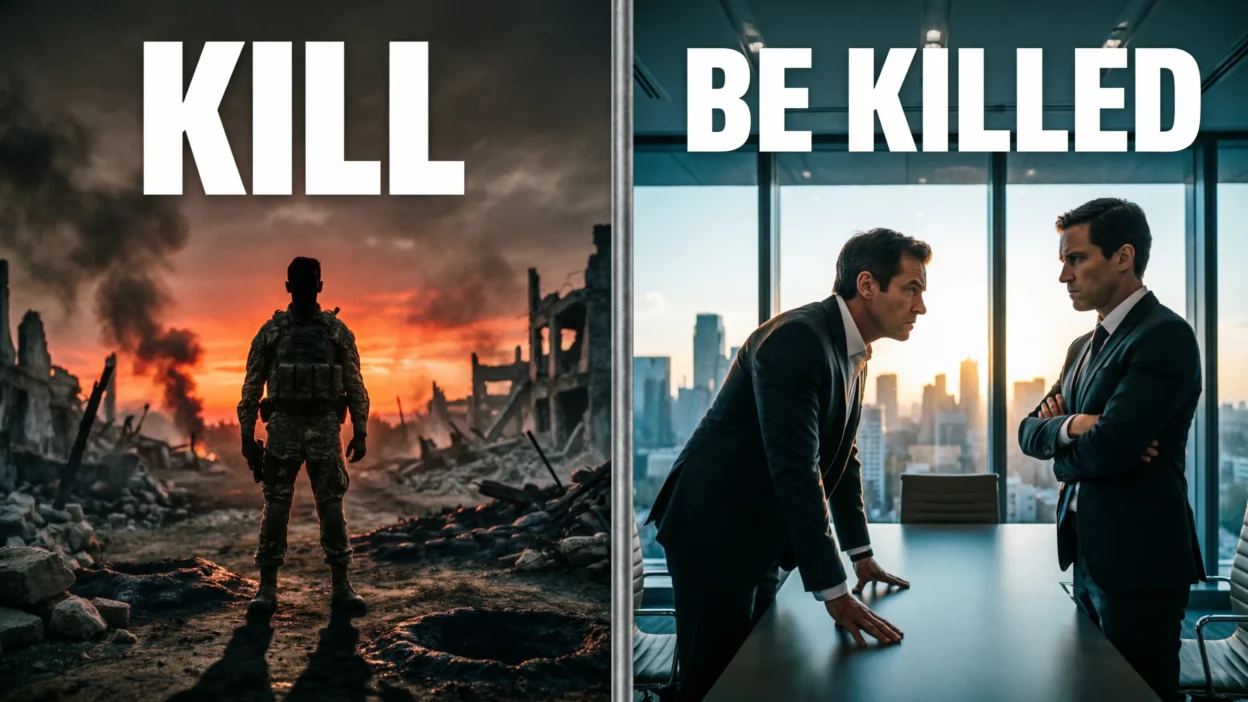
In its original and literal form, the phrase refers to a situation of immediate physical danger—especially in combat, war, or life-threatening conflict.
Literal Examples
- In battle, soldiers often face a kill or be killed reality.
- The animal acted on instinct—it was kill or be killed in the wild.
- In extreme survival scenarios, it becomes kill or be killed.
This meaning is direct and serious. It describes survival through force.
The phrase is often associated with war films, military discussions, and survival narratives.
Figurative Meaning of Kill or Be Killed
Over time, the phrase evolved into a metaphor used to describe intense competition.
It does not mean literal violence in these contexts. Instead, it expresses pressure, urgency, or ruthless competition.
Figurative Examples
- The startup world can feel like kill or be killed.
- Professional sports at the highest level are kill or be killed.
- In the stock market, it’s often kill or be killed.
Here, the phrase emphasizes:
- High stakes
- Aggressive competition
- Survival of the fittest
- Zero room for weakness
It’s commonly used in business, sports, and entertainment commentary.
Kill or Be Killed: Tone and Connotation
This phrase carries strong emotional weight. It suggests:
- Urgency
- Aggression
- Ruthlessness
- Survival instinct
Because of its intensity, it should be used carefully in formal writing. It works best in:
- Storytelling
- Opinion pieces
- Sports commentary
- Motivational speeches
- Fiction
It may sound overly dramatic in academic or professional reports.
Comparison: Literal vs Figurative Use
| Context | Meaning | Example |
|---|---|---|
| War/Combat | Survival through violence | Soldiers faced a kill or be killed situation |
| Wildlife | Instinct-based survival | In the jungle, it’s kill or be killed |
| Business | Extreme competition | The industry feels kill or be killed |
| Sports | High-pressure competition | The finals were kill or be killed |
The meaning changes depending on context, but the intensity remains.
Common Mistakes to Avoid
1. Using It in Casual Contexts
Because it’s intense, using it for minor situations can sound exaggerated.
Overdramatic:
- The office potluck was kill or be killed.
Unless you’re being humorous, this sounds extreme.
2. Using It in Sensitive Contexts
In serious real-world situations involving violence, the phrase can feel insensitive. Tone matters.
3. Assuming It Always Means Violence
In modern usage, it’s often metaphorical. Context determines whether it’s literal or figurative.
American vs British English Usage
There is no spelling difference between American and British English for kill or be killed.
However:
- In American English, it’s often used in sports and business commentary.
- In British English, it appears more frequently in journalism and dramatic writing.
In both dialects, the meaning remains the same.
Similar Expressions and Synonyms
If you want alternatives with less intensity, consider:
- Survival of the fittest
- Dog-eat-dog world
- High-stakes competition
- Win at all costs
- Cutthroat environment
Each carries a slightly different tone, but all suggest competition and pressure.
Real-World Examples in Different Fields
Military and War
- Combat can become a kill or be killed environment.
Business
- In highly competitive markets, it’s often kill or be killed.
Sports
- Championship games can feel like kill or be killed.
Nature
- In the wild, predators live by a kill or be killed instinct.
These examples show how flexible the phrase is across contexts.
Frequently Asked Questions (FAQs)
1. Is “kill or be killed” always literal?
No. It is often used metaphorically to describe intense competition or pressure.
2. Is the phrase appropriate in professional writing?
It depends on tone. It works in opinion pieces or creative writing but may be too dramatic for formal reports.
3. Does it promote violence?
Not necessarily. In modern usage, it is often symbolic rather than literal.
4. Where did the phrase originate?
It likely originated from military and survival contexts where self-defense was a matter of life or death.
5. Can it be used humorously?
Yes, but carefully. Its intensity can make humor effective if the exaggeration is obvious.
6. Are there softer alternatives?
Yes. Phrases like “highly competitive” or “survival of the fittest” are less aggressive.
Final Summary: What Kill or Be Killed Really Means
The phrase kill or be killed describes extreme survival situations either literal life or death scenarios or intense metaphorical competition.
While its origins are rooted in combat and survival, modern usage often applies it to business, sports, and high pressure environments.
Because the phrase carries strong emotional intensity, it should be used thoughtfully.
When applied correctly, it powerfully communicates urgency, competition, and the instinct to survive. But in sensitive or formal contexts, a softer alternative may be more appropriate.
Actionable Takeaway
Before using the phrase, ask yourself:
- Is this truly a high-stakes or survival situation?
- Am I using it literally or metaphorically?
- Would a less intense phrase work better?
Choosing the right tone ensures your message remains powerful without being excessive.