Few word pairs confuse writers as often as loose and lose. They look similar, sound somewhat alike, and are often mistyped but their meanings are completely different.
Using the wrong one can instantly damage the professionalism of your writing. If you’ve ever written “I don’t want to loose” by mistake, this guide will fix that confusion permanently.
Let’s break it down clearly and simply.
Quick Answer
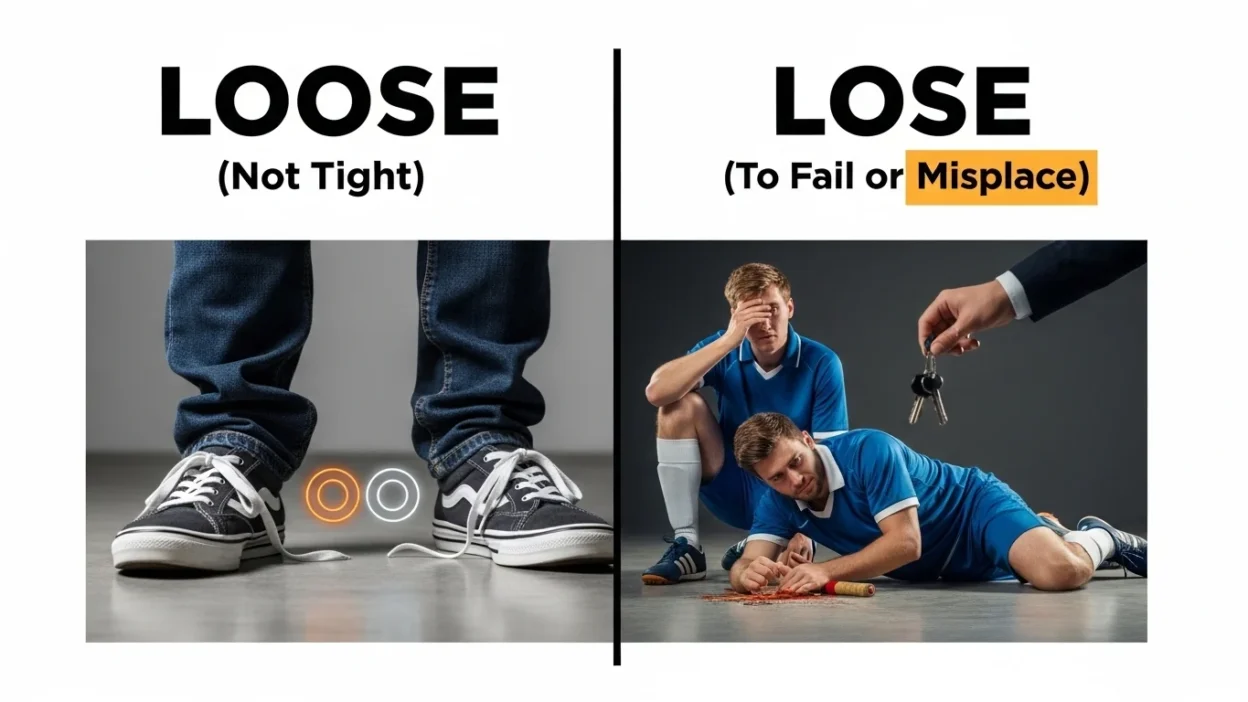
- ✅ Lose = To misplace something or fail to win
- ✅ Loose = Not tight or not firmly fixed
They are different words with different meanings and pronunciations.
What Does “Lose” Mean?
Lose is a verb. It means:
- To fail to win
- To misplace something
- To no longer have something
Examples of “Lose”
- I don’t want to lose this game.
- She might lose her keys.
- If you don’t study, you could lose marks.
- He doesn’t want to lose his job.
Think: Lose = loss = defeat
What Does “Loose” Mean?
Loose is usually an adjective. It describes something that is:
- Not tight
- Not secured
- Free or relaxed
Examples of “Loose”
- My shoes are too loose.
- There’s a loose wire hanging.
- She prefers loose clothing.
- The dog is running loose in the park.
Think: Loose = baggy = not tight
Pronunciation Difference
This helps a lot:
- Lose sounds like “looz” (rhymes with choose)
- Loose sounds like “loose” (rhymes with moose)
The double “o” in loose makes a longer “s” sound.
Why People Confuse Them
- They look very similar.
- Both contain “oo.”
- Fast typing mistakes.
- Autocorrect errors.
But remember:
If it means to fail, use lose.
If it means not tight, use loose.
Common Mistakes to Avoid
Incorrect:
- I don’t want to loose weight.
- We might loose the match.
Correct:
- I don’t want to lose weight.
- We might lose the match.
Incorrect:
- My shirt is lose.
Correct:
- My shirt is loose.
Memory Tricks
Here are two easy tricks:
- Lose has lost inside it.
Lose → Lost → Losing - Loose has extra “o” because loose things have extra room.
That extra “o” = extra space = not tight.
When to Be Extra Careful
Be careful in:
- Academic writing
- Business emails
- Website content
- Social media captions
This mistake is extremely common and noticeable.
FAQs
What is the difference between loose and lose?
“Lose” is a verb meaning to fail or misplace something, while “loose” is an adjective meaning not tight or not firmly fixed.
Is “loose” ever a verb?
Yes, but rarely. “Loose” can mean to release something (e.g., loose the dogs), but this usage is uncommon in modern English.
Why do people mix up lose and loose?
Because they look similar and both contain double “o,” making them easy to mistype.
How can I remember the correct spelling?
Remember: Loose has extra “o” for extra room (not tight). Lose is about loss or defeat.
Which mistake is more common?
Writing “loose” instead of “lose” is one of the most common spelling mistakes in English.
Final Thoughts
Understanding the difference between loose and lose is essential for clear and professional writing.
Even though the words look similar, their meanings are completely different. One refers to defeat or misplacing something, while the other describes something that isn’t tight.
This small spelling detail makes a big impact. Mixing them up can confuse readers and weaken your credibility. The good news? Once you connect “lose” with “loss” and “loose” with extra space, you’ll never confuse them again.
Mastering small distinctions like this helps elevate your writing and builds trust with your audience. Pay attention to the meaning not just the spelling and you’ll always choose the correct word.

Lutana Maroochy is a creative author recognized for delivering engaging and well-researched content. With a passion for clear communication and storytelling, Lutana focuses on producing informative, reader-centered articles across various subjects. Dedicated to quality and originality, Lutana consistently connects with audiences through thoughtful insights and compelling narratives.