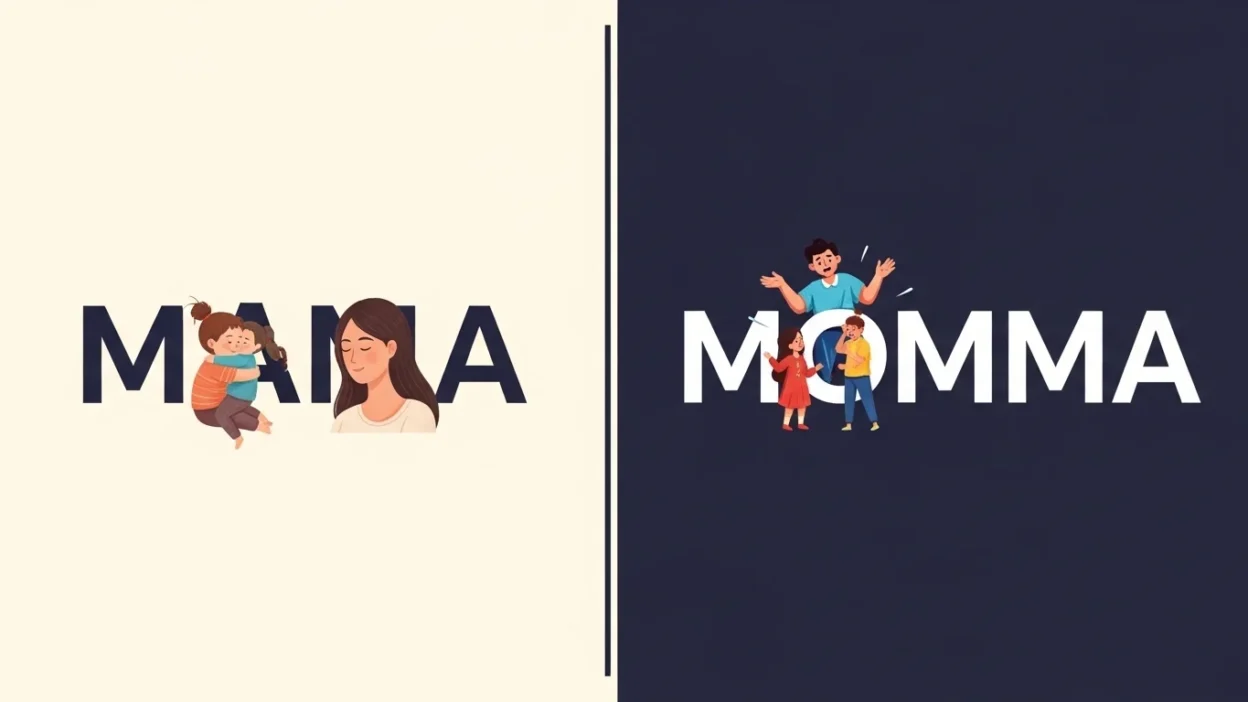
When it comes to affectionate words for mothers, “momma” and “mama” are both widely used but they’re not exactly the same.
These terms often appear in everyday speech, family conversations, and even songs, which can make it confusing to know which one is more appropriate.
The truth is, both are correct—but their usage depends on tone, region, and personal preference.
Quick Answer
- ✅ Mama = Standard, widely accepted, and more common
- ✅ Momma = Informal variation, often used for emphasis or affection
Both are correct, but mama is more standard, while momma feels more casual and expressive.
What Does “Mama” Mean?
Mama is a common and widely accepted term for mother. It is often one of the first words children learn and is used across many cultures and languages.
It can be used in both informal and slightly formal emotional contexts.
Examples of “Mama”
- I love you, Mama.
- Her mama called her for dinner.
- The baby said “mama” for the first time.
- She hugged her mama tightly.
This word is simple, natural, and universally understood.
What Does “Momma” Mean?
Momma is a more informal and expressive spelling of mama. It is often used to add warmth, emphasis, or emotional tone.
It is especially common in:
- Casual speech
- Dialects (especially in American Southern English)
- Emotional or storytelling contexts
Examples of “Momma”
- My momma always said to be kind.
- Go ask your momma.
- That’s my momma!
- His momma taught him well.
“Momma” often sounds more personal and heartfelt.
Key Difference Between Momma and Mama
The main difference is tone and style, not meaning.
- Mama → More standard and widely used
- Momma → More expressive and informal
Both refer to mother, but they feel slightly different in tone.
Quick Comparison Table
| Word | Tone | Usage |
|---|---|---|
| Mama | Neutral, standard | Common worldwide |
| Momma | Informal, emotional | Casual speech, storytelling |
When Should You Use Each?
Use “Mama” When:
- Writing in a neutral or standard tone
- Speaking in general or global contexts
- Teaching or learning English
Use “Momma” When:
- You want a warm, emotional tone
- Writing dialogue or storytelling
- Reflecting casual or regional speech
Common Mistakes to Avoid
There are no strict “wrong” uses here, but context matters.
Less appropriate:
- Formal writing: The child called her momma. ⚠️
Better:
- Formal writing: The child called her mama. ✅
In casual conversation, both are perfectly fine.
Easy Memory Trick
Think of it this way:
- Mama = Standard
- Momma = More emotional (extra “m” = extra feeling)
That extra “m” adds warmth and personality.
American vs British English
- Mama is widely used in both American and British English
- Momma is more common in American English, especially in informal or regional speech
In British English, mum is more commonly used instead of both.
Frequently Asked Questions (FAQs)
Is momma a real word?
Yes. Momma is a real word used informally to refer to one’s mother.
Which is more correct, mama or momma?
Both are correct, but mama is more standard and widely accepted.
Is momma more emotional than mama?
Yes. Momma often sounds more expressive and personal.
Can I use momma in formal writing?
It’s better to use mama in formal writing, as momma is more informal.
Why do people say momma instead of mama?
It often reflects regional speech patterns or a desire to sound more affectionate.
Is mama used worldwide?
Yes. Mama is one of the most universal words for mother across many languages.
Final Thoughts
The difference between momma and mama comes down to tone, style, and context rather than correctness.
Mama is the more standard and widely accepted form, making it suitable for most situations, including writing and general communication. On the other hand, momma adds a layer of warmth, personality, and emotional expression.
Both words are correct and meaningful, so the best choice depends on how you want your message to feel. If you’re aiming for clarity and neutrality, go with mama. If you want to sound more heartfelt or conversational, momma is a great choice.

Lutana Maroochy is a creative author recognized for delivering engaging and well-researched content. With a passion for clear communication and storytelling, Lutana focuses on producing informative, reader-centered articles across various subjects. Dedicated to quality and originality, Lutana consistently connects with audiences through thoughtful insights and compelling narratives.