
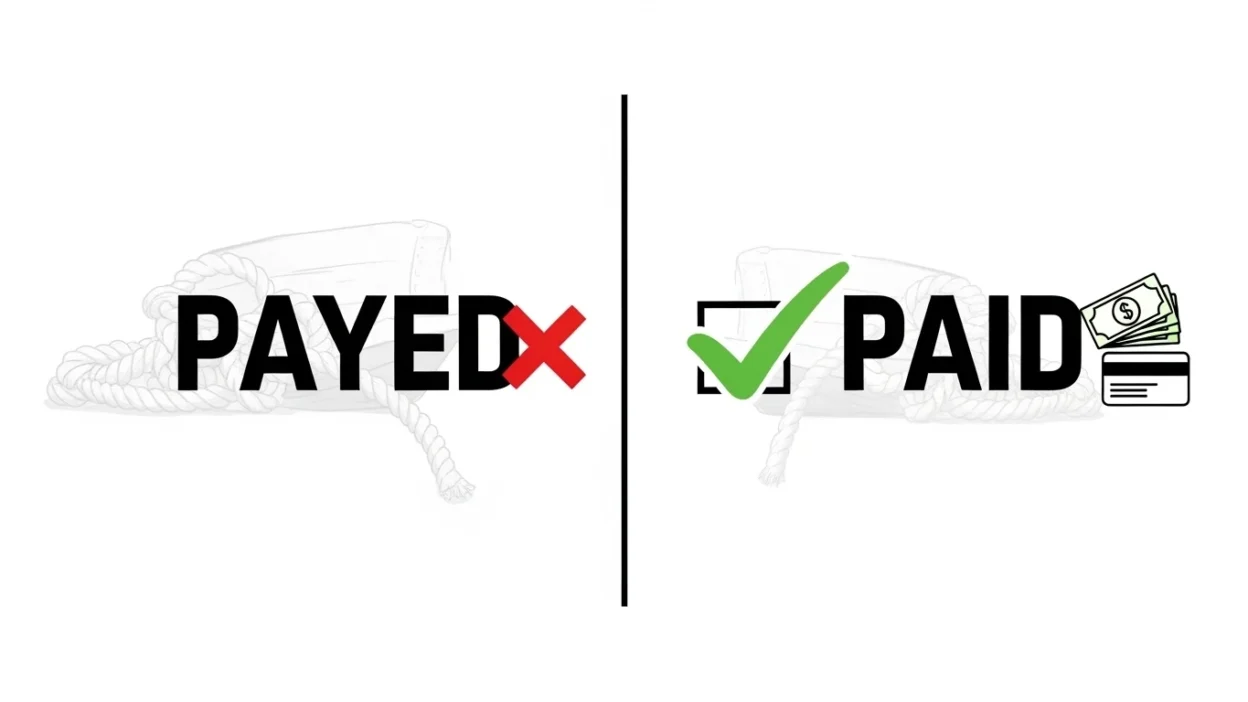
The words paid and payed look like they could both be correct forms of the verb pay.
However, in modern English, only one of them is used in almost all everyday situations. The other exists—but only in very specific, technical contexts.
If you’ve ever hesitated while writing this word, this guide will make it crystal clear.
Quick Answer
- ✅ Paid = Correct in almost all situations
- ⚠️ Payed = Rare, used only in nautical (sailing) contexts
In everyday English, you should almost always use paid.
What Does “Paid” Mean?
Paid is the past tense and past participle of the verb pay. It means to give money for something or settle a debt.
It is used in both formal and informal contexts.
Examples of “Paid”
- I paid the bill yesterday.
- She has already paid for the tickets.
- They paid him for his work.
- He finally paid his debts.
In all normal situations involving money or transactions, paid is the correct word.
What Does “Payed” Mean?
Payed is a rare and specialized term used mainly in nautical (sailing) contexts.
It means:
- To seal a boat with pitch or tar
- To let out rope or cable (e.g., “payed out the rope”)
Examples of “Payed” (Technical Use)
- The crew payed the deck to protect it from water.
- They payed out the rope slowly.
This usage is uncommon and mostly limited to maritime language.
Why People Confuse Paid and Payed
The confusion happens because:
- Many verbs form the past tense with -ed
- People assume pay → payed follows the same rule
- The spelling looks logical, but English has irregular verbs
However, pay is an irregular verb, so its correct past form is paid.
Quick Comparison Table
| Word | Meaning | Usage |
|---|---|---|
| Paid | Past tense of pay (money, transactions) | ✅ Common |
| Payed | Nautical term (rope, sealing boats) | ⚠️ Rare |
Common Mistakes to Avoid
Incorrect:
- I payed the bill. ❌
- She payed for dinner. ❌
Correct:
- I paid the bill. ✅
- She paid for dinner. ✅
Unless you’re talking about boats or ropes, payed is wrong.
Easy Memory Trick
Think of this:
Money is important → so use “paid”
Or:
Pay → Paid (not payed)
If money is involved, always choose paid.
American vs British English
There is no difference between American and British English for this word.
- Paid is correct in both
- Payed is only used in technical maritime language
Frequently Asked Questions (FAQs)
Is payed ever correct?
Yes, but only in rare nautical contexts related to ropes or sealing boats.
What is the correct past tense of pay?
The correct past tense is paid.
Why is payed incorrect in most cases?
Because “pay” is an irregular verb, and its correct past form is “paid,” not “payed.”
Can I use payed in everyday writing?
No. In normal situations, you should always use paid.
What does “payed out” mean?
It refers to slowly releasing rope or cable, mainly in sailing contexts.
Which word is more common?
Paid is extremely common, while payed is very rare.
Final Thoughts
The difference between paid and payed is simple but important. Paid is the correct past tense of pay and is used in almost all everyday situations involving money, transactions, or payments. On the other hand, payed is a rare technical term used mainly in maritime contexts.
To avoid mistakes, remember this simple rule: if money is involved, always use “paid.” This will help you write clearly, correctly, and confidently in both casual and professional communication.