When writing about goals, marketing campaigns, or specific audiences, many people hesitate between targetted and targeted.
Because English sometimes doubles letters when adding suffixes, it’s easy to wonder if the extra “t” is needed. However, only one spelling is considered correct in standard English.
Understanding the correct form will help you avoid a very common spelling mistake.
Quick Answer
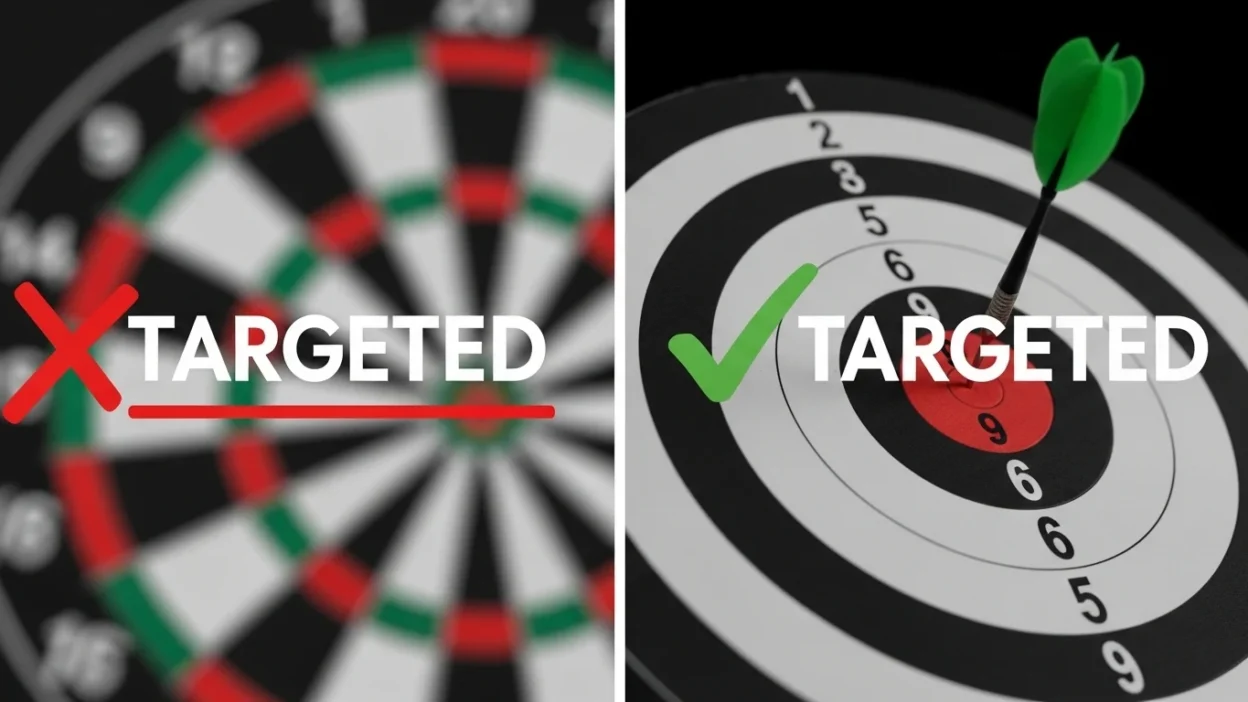
- ✅ Targeted = Correct spelling
- ❌ Targetted = Incorrect spelling
The correct word is targeted, with only one “t” before “ed.”
What Does “Targeted” Mean?
Targeted is the past tense and past participle of the verb target. It means to direct something toward a specific person, group, or objective.
It is commonly used in areas such as marketing, business, education, and communication.
Examples of “Targeted”
- The company launched a targeted advertising campaign.
- The program targeted young entrepreneurs.
- Police targeted the area for extra security.
- The teacher targeted weak areas in the lesson.
In each example, the action focuses on a specific goal or audience.
Why “Targetted” Is Incorrect
The spelling targetted is a common mistake caused by confusion about English doubling rules.
Some verbs double the final consonant before adding -ed, such as:
- Stop → Stopped
- Plan → Planned
However, target does not follow this pattern.
So the correct form remains:
Target → Targeted
(Not targetted)
Understanding the Spelling Rule
English sometimes doubles the final consonant when:
- The word has one syllable
- The final consonant follows a short vowel
Example:
- Stop → Stopped
But target has two syllables, so the consonant is not doubled.
Quick Comparison Table
| Word | Meaning | Correct Usage |
|---|---|---|
| Targeted | Directed toward a specific goal | ✅ Correct |
| Targetted | Misspelling | ❌ Incorrect |
Always use targeted in professional and academic writing.
Common Mistakes to Avoid
Incorrect:
- The campaign targetted teenagers. ❌
- The company targetted a new audience. ❌
Correct:
- The campaign targeted teenagers. ✅
- The company targeted a new audience. ✅
Removing the extra “t” fixes the mistake.
Easy Memory Trick
Think of the word:
Target → Targeted
You simply add -ed to the original word.
No extra “t” is needed.
American vs British English
There is no difference between American and British English for this word. Both use the spelling targeted.
The form targetted is not considered standard in either variety.
Frequently Asked Questions (FAQs)
What is the correct spelling, targeted or targetted?
The correct spelling is targeted, with one “t.”
Why do people write targetted?
Many people assume the final consonant should be doubled before adding “-ed,” but this rule does not apply to the word target.
What does targeted mean?
Targeted means directing something toward a specific person, group, or goal.
Is targeted used in marketing?
Yes. The phrase targeted marketing is commonly used to describe advertising aimed at a specific audience.
Is targetted ever correct?
No. Targetted is considered a misspelling in standard English.
What is the base word of targeted?
The base word is target, which means a goal or intended focus.
Final Thoughts
The difference between targetted and targeted is simply correct spelling versus a common error. Targeted is the correct form and means directing something toward a specific audience, goal, or objective. The spelling targetted adds an unnecessary extra “t” and should be avoided.
Because the word frequently appears in business, marketing, and professional communication, using the correct spelling helps maintain credibility and clarity in your writing. Remember the simple rule: just add “-ed” to target, and you get targeted.

Narelle Merindah is a passionate author committed to delivering thoughtful, engaging, and well-structured content. With a keen eye for detail and a love for storytelling, Narelle creates informative articles that resonate with readers. Her dedication to clarity, creativity, and authenticity ensures meaningful and impactful writing.