Hand gestures say a lot—sometimes more than words. If you’ve ever wondered about the difference between thumb in vs thumb out, you’re not alone. These simple hand positions can carry different meanings depending on context, culture, and body language interpretation.
In this complete guide, we’ll explain what thumb in and thumb out mean, where they’re used, how they differ in communication, common mistakes, cultural considerations, and practical examples.
Whether you’re studying body language, improving communication skills, or just curious, this breakdown will make everything clear.
Quick Answer: Thumb In vs Thumb Out
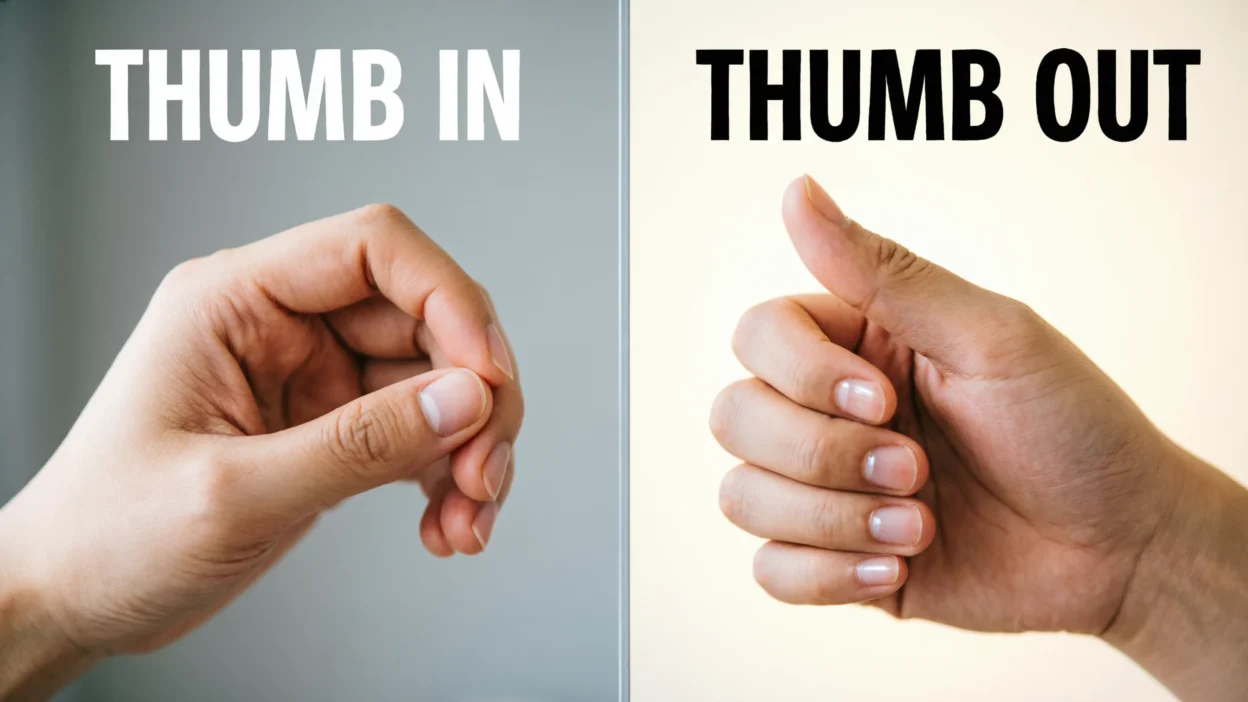
- Thumb in → Thumb tucked inside the fingers or pointing inward toward the body
- Thumb out → Thumb extended outward, away from the hand or body
The difference is primarily about hand positioning, but the meaning can change depending on context.
What Does “Thumb In” Mean?
Thumb in typically refers to one of two positions:
- The thumb tucked inside a closed fist
- The thumb pointing inward toward the body
Common Interpretations of Thumb In
Depending on context, thumb-in positioning may signal:
- Reserved or defensive body language
- Nervousness or insecurity
- Self-protection
- A relaxed, casual stance (in some cases)
Examples of Thumb In
- A child making a fist with the thumb tucked inside
- A person standing with hands in pockets and thumbs pointing inward
- A boxer forming a safe fist with the thumb wrapped outside but pointing inward
In body language analysis, thumb-in gestures can sometimes suggest emotional restraint.
What Does “Thumb Out” Mean?
Thumb out generally refers to the thumb extending outward from the hand or away from the body.
This position is more open and visible.
Common Interpretations of Thumb Out
Thumb-out gestures often suggest:
- Confidence
- Dominance
- Openness
- Authority
- Relaxation
Examples of Thumb Out
- A “thumbs up” gesture
- A confident stance with thumbs hooked outside the pockets
- A person gesturing outward while speaking
In body language studies, visible thumbs are often associated with higher confidence levels.
Thumb In vs Thumb Out: Key Differences
Here’s a simple comparison table to make it easy:
| Feature | Thumb In | Thumb Out |
|---|---|---|
| Position | Tucked inward | Extended outward |
| Visibility | Less visible | Clearly visible |
| Body Language | Reserved, protective | Confident, open |
| Common Context | Nervous posture | Assertive stance |
| Emotional Signal | Guarded | Self-assured |
Thumb In vs Thumb Out in Body Language
Body language experts often analyze thumb positioning because thumbs are linked to dominance signals in nonverbal communication.
Thumb In = Protective
When someone hides their thumbs:
- They may feel uncertain
- They may want to appear smaller
- They may be uncomfortable
Thumb Out = Confident
When thumbs are clearly visible:
- The person may feel secure
- They may be asserting authority
- They may be relaxed and comfortable
However, context always matters.
Cultural Differences
Gestures can vary across cultures.
For example:
- A thumbs-up (thumb out) is positive in many Western cultures.
- In some countries, it can be considered rude.
- A thumb tucked into the fist has no strong cultural meaning in most regions but may simply reflect comfort or habit.
Always consider cultural setting before interpreting meaning.
Safety Note: Thumb In When Making a Fist
There’s one important practical difference:
When forming a fist:
- The thumb should wrap outside the fingers.
- Tucking the thumb inside the fist can cause injury during impact.
This is especially important in sports like boxing or martial arts.
So from a physical safety perspective:
- ❌ Thumb inside fist = risk of injury
- ✅ Thumb outside fist = correct technique
Common Mistakes to Avoid
1. Overanalyzing Every Gesture
Not every thumb position has deep psychological meaning. Sometimes people just stand comfortably.
2. Ignoring Context
A confident executive and a relaxed teenager may both show thumb-out gestures, but the meaning may differ.
3. Misinterpreting Nervous Habits
Some people naturally tuck their thumbs without feeling anxious.
American vs British English Usage
The terms thumb in and thumb out are informal descriptive phrases. They are used similarly in both American and British English.
There are no spelling differences between the two dialects for these expressions.
However:
- In American English, “thumbs up” is very commonly used.
- In British English, the same expression is equally common.
The meanings remain consistent across both.
Real-Life Scenarios
In Public Speaking
A speaker using thumb-out gestures may appear:
- More authoritative
- More persuasive
- More confident
In Interviews
Candidates with open hand gestures (thumb out) may seem:
- Approachable
- Honest
- Comfortable
In Social Settings
Someone with thumb-in posture might:
- Feel shy
- Be observing rather than leading
FAQs About Thumb In vs Thumb Out
1. Is thumb in always a sign of insecurity?
No. It can simply be a comfortable or neutral hand position.
2. Does thumb out always mean confidence?
Not necessarily. It often suggests openness, but personality and context matter.
3. Is tucking your thumb inside a fist dangerous?
Yes, especially during impact activities. It can cause injury.
4. Which gesture is more dominant?
Thumb-out gestures are often associated with dominance in body language research.
5. Are these gestures universal?
Not entirely. Cultural interpretation varies.
6. Is thumb positioning important in communication?
Yes. Small nonverbal cues can subtly influence how others perceive you.
7. Should I change my natural gesture style?
Only if it affects professional communication. Authenticity matters most.
Final Summary
The difference between thumb in vs thumb out is mainly about hand positioning, but the interpretation can extend into body language and communication psychology.
Thumb in gestures are often seen as more reserved or protective, while thumb out gestures tend to signal openness and confidence.
That said, context is everything. Culture, personality, environment, and situation all play a role in how these gestures are perceived. There’s no universal rule just general patterns.
Actionable Takeaway
If you want to project confidence:
- Keep your hands visible
- Avoid hiding your thumbs in high-stakes situations
- Use natural, open gestures
But remember: authenticity matters more than forced body language.

Euroa Alinta is a dedicated author known for crafting engaging and insightful content. With a strong passion for storytelling and digital publishing, Euroa specializes in creating informative, reader-friendly articles. Her work reflects creativity, clarity, and authenticity, connecting audiences with meaningful ideas across diverse topics and interests.