The words “too” and “to” are among the most commonly confused in English.
They sound the same, but their meanings and uses are very different. This small mistake can change the meaning of a sentence, so understanding the difference is important for clear and correct writing.
If you’ve ever paused while typing to choose between these two, you’re not alone—let’s make it simple and clear.
Quick Answer
- ✅ To = A preposition or part of an infinitive (e.g., to go, to the store)
- ✅ Too = Means also or excessively (e.g., too much, me too)
What Does “To” Mean?
To is one of the most commonly used words in English. It has two main functions:
1. As a Preposition
It shows direction, place, or relationship.
Examples:
- I am going to the market.
- She gave the book to her friend.
- We walked to the park.
2. As Part of an Infinitive Verb
It is used before the base form of a verb.
Examples:
- I want to eat.
- He plans to travel.
- They decided to study.
What Does “Too” Mean?
Too has two main meanings:
1. Meaning “Also” or “As Well”
Examples:
- I want to come too.
- She likes pizza, and I do too.
- He is coming too.
2. Meaning “More Than Enough” or “Excessively”
Examples:
- This bag is too heavy.
- It’s too hot outside.
- You are working too hard.
Key Difference Between Too and To
The difference comes down to function and meaning:
- To → Shows direction or forms verbs
- Too → Means also or more than enough
Quick Comparison Table
| Word | Meaning | Example |
|---|---|---|
| To | Direction or part of a verb | I want to learn. |
| Too | Also / excessively | It’s too cold. |
Common Mistakes to Avoid
Incorrect:
- I want too go home. ❌
- She is going too the store. ❌
Correct:
- I want to go home. ✅
- She is going to the store. ✅
Incorrect:
- I am coming to. ❌
Correct:
- I am coming too. ✅
Even though they sound the same, using the wrong one can make your sentence incorrect.
Easy Memory Trick
Think of it this way:
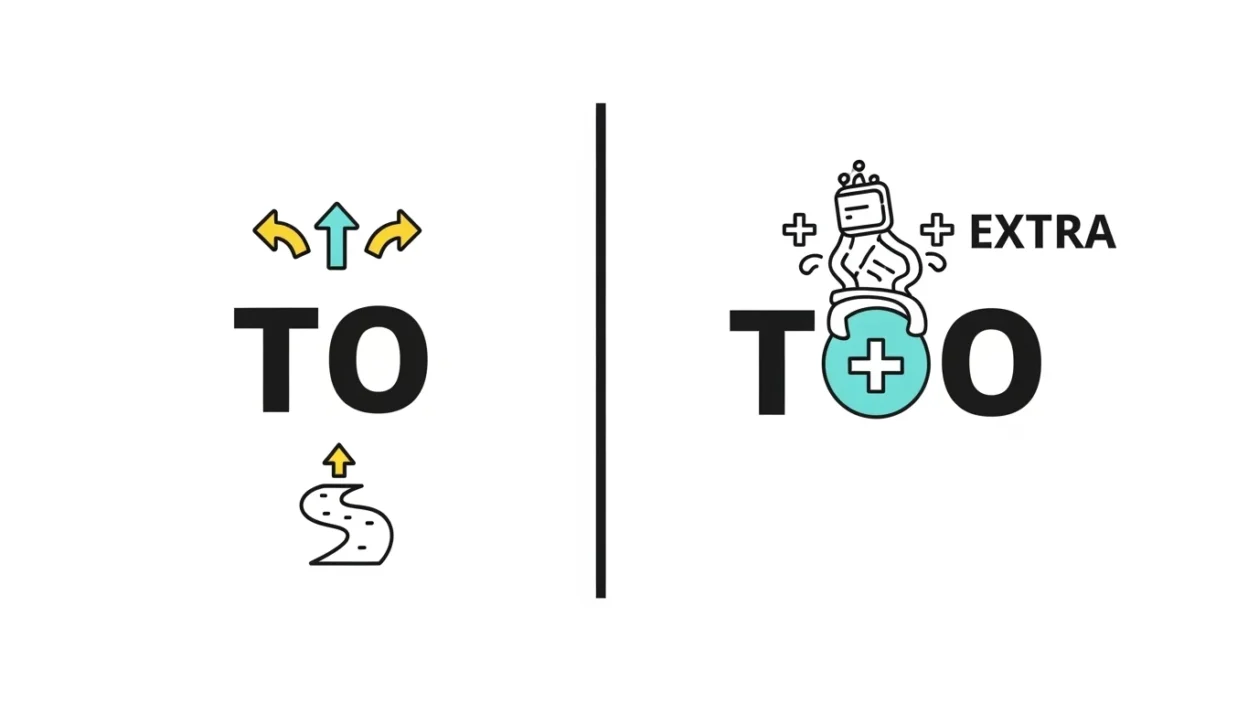
- Too has an extra “o” → means extra (more than enough)
- To has one “o” → used for direction or verbs
This simple trick helps you remember quickly.
American vs British English
There is no difference between American and British English for to and too. Both forms are used the same way in all English varieties.
Frequently Asked Questions (FAQs)
What is the difference between to and too?
“To” is used for direction or verbs, while “too” means also or excessively.
When should I use “too”?
Use “too” when you mean “also” or when something is more than enough.
Can “too” mean very?
Yes. In some contexts, “too” can mean excessively, like “too hot” or “too fast.”
Is “to” always used before a verb?
No. It is also used as a preposition, such as “go to school.”
Why do people confuse to and too?
They sound the same, which makes them easy to mix up in writing.
Can I use “too” at the end of a sentence?
Yes. For example, “I want to come too.”
Final Thoughts
The difference between too and to is simple once you understand their roles. To is used for direction and forming verbs, while too is used to mean also or more than enough. Even though they sound identical, their meanings are completely different.
By remembering that “too” has an extra ‘o’ for something extra, you can avoid this common mistake. With practice, choosing between to and too will become natural, helping you write more clearly and confidently in everyday English.

Euroa Alinta is a dedicated author known for crafting engaging and insightful content. With a strong passion for storytelling and digital publishing, Euroa specializes in creating informative, reader-friendly articles. Her work reflects creativity, clarity, and authenticity, connecting audiences with meaningful ideas across diverse topics and interests.