Many English learners confuse “giving” and “given” because both come from the verb “give.”
However, they serve different grammar roles, so using the wrong one can make a sentence incorrect.
So, if you want natural and accurate English, you need to understand when to use each form. In this guide, you’ll learn the meanings, examples, differences, and easy tricks to remember them confidently.
Quick Answer
✨ Here’s the simple rule:
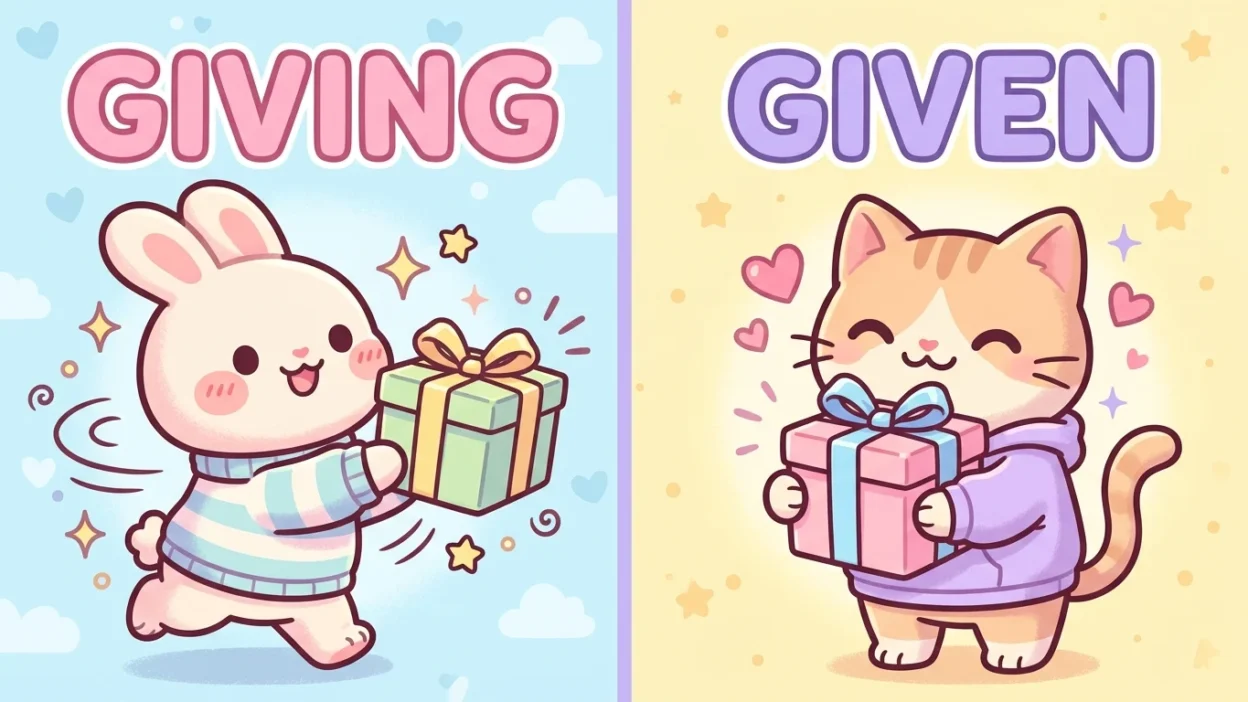
- ✅ Giving = present participle / continuous action
- ✅ Given = past participle / completed action
👉 Easy trick:
- Giving = happening now
- Given = already done
🌟 Examples:
- She is giving a speech. ✔
- She has given a speech. ✔
What Does “Giving” Mean?
First of all, “giving” is the present participle form of “give.” Therefore, it usually describes an action happening right now or continuously.
Common Uses:
- Continuous tenses
- Ongoing actions
- Descriptions
Examples:
- He is giving a presentation.
- They are giving free samples.
- She kept giving helpful advice.
👉 So, whenever the action continues or happens now, use “giving.”
What Does “Given” Mean?
On the other hand, “given” is the past participle form of “give.” Therefore, it usually describes a completed action.
Common Uses:
- Perfect tenses
- Passive voice
- Completed actions
Examples:
- She has given her answer.
- The award was given yesterday.
- They had given permission already.
👉 So, whenever the action is completed, use “given.”
Key Differences Between “Giving” and “Given”
| Word | Grammar Role | Meaning |
|---|---|---|
| Giving | Present participle | Action happening now |
| Given | Past participle | Action already completed |
Common Mistakes to Avoid
Even though both words come from the same verb, they cannot replace each other freely. So, let’s fix common errors:
❌ Incorrect:
- She is given a gift now.
✔ Correct: She is giving a gift now.
❌ Incorrect:
- They have giving their opinion.
✔ Correct: They have given their opinion.
👉 So, always check the tense carefully.
Easy Trick to Remember
Whenever you feel unsure, remember:
- -ing = ongoing action
- Given = finished action
👉 Think:
- Giving now
- Given already
Because of this trick, you will choose correctly more easily.
American vs British English
Interestingly, both American and British English use “giving” and “given” exactly the same way. So, you don’t need to worry about regional differences.
Real-Life Examples
In Daily Life:
- She is giving him directions.
- He has given me great advice.
In School or Work:
- The teacher is giving homework.
- The manager had given instructions.
Why This Matters
Although this looks like a small grammar detail, correct verb forms improve clarity greatly. When you choose the right word:
- You sound more natural
- You improve grammar accuracy
- You avoid tense mistakes
As a result, your English becomes smoother and more professional.
FAQs
Which is correct: giving or given?
Both are correct, but they are used in different grammar situations.
What does giving mean?
It describes an ongoing or current action.
What does given mean?
It describes a completed action or passive structure.
Can giving and given replace each other?
No, because they serve different grammar roles.
Is given a past tense?
No, “gave” is the past tense. “Given” is the past participle.
What is the easiest way to remember this?
“Giving” happens now, while “given” already happened.
Final Thoughts
Now you clearly understand the difference between “giving” and “given.” While “giving” describes ongoing action, “given” refers to completed action or passive structures.
Because of this simple grammar rule, you can avoid very common tense mistakes easily.
As you continue practicing, you will naturally choose the correct form without hesitation. So, instead of guessing, you will speak and write clearly every time.

Narelle Merindah is a passionate author committed to delivering thoughtful, engaging, and well-structured content. With a keen eye for detail and a love for storytelling, Narelle creates informative articles that resonate with readers. Her dedication to clarity, creativity, and authenticity ensures meaningful and impactful writing.