If you’ve ever wondered whether to write afterward or afterwards, you’re not alone. Both spellings look correct and the truth is, they are. The difference comes down to regional spelling preferences.
In this guide, we’ll clearly explain afterward vs afterwards, show examples, compare American and British English usage, highlight common mistakes, and answer FAQs in the correct structure you prefer.
Quick Answer: Afterward vs Afterwards
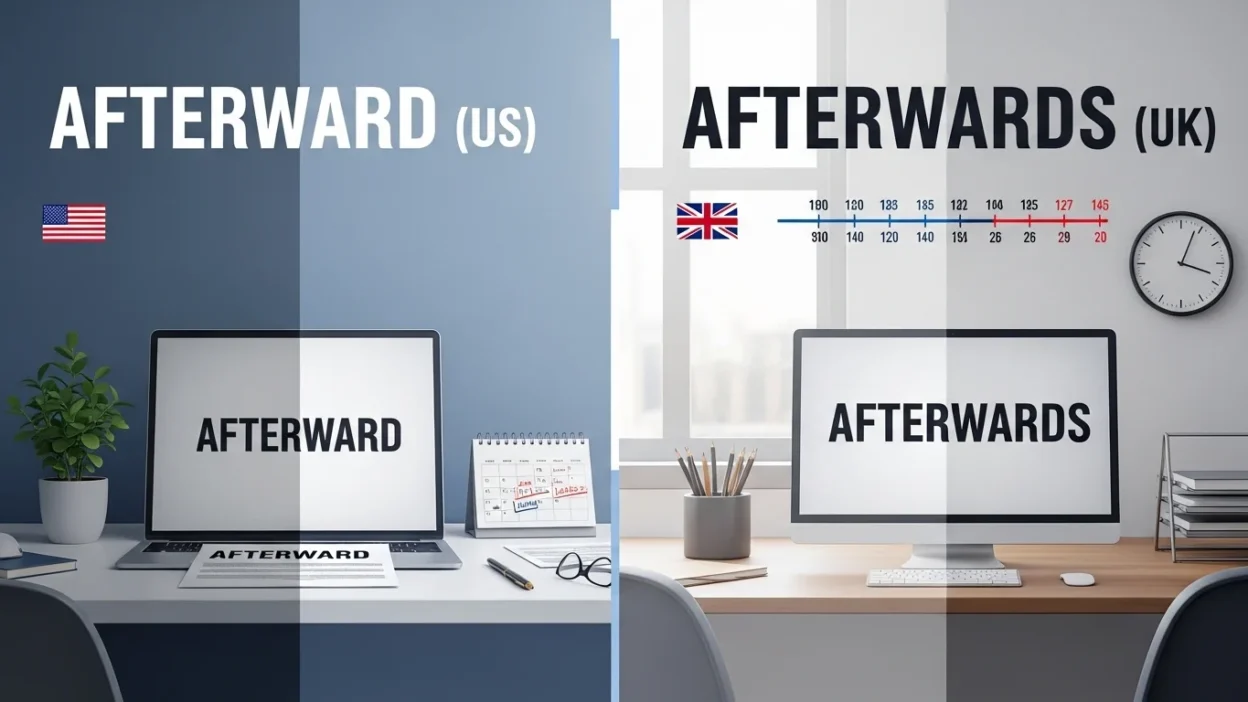
- ✅ Afterward = American English
- ✅ Afterwards = British English
Both words mean the same thing: at a later time.
What Does “Afterward(s)” Mean?
Afterward / Afterwards is an adverb meaning:
- Later
- At a later time
- Following an event
Examples
- We went out for dinner, and afterward we watched a movie. (US)
- We went out for dinner, and afterwards we watched a movie. (UK)
- She finished her work and relaxed afterward.
- He apologized afterwards.
The meaning does not change — only the spelling does.
American vs British English Differences
This follows a common pattern in English:
| American English | British English |
|---|---|
| Afterward | Afterwards |
| Toward | Towards |
| Forward | Forwards |
| Backward | Backwards |
Key Pattern
- American English often drops the “s”
- British English usually keeps the “s”
Both forms are grammatically correct within their dialects.
Which One Should You Use?
It depends on your audience.
Use “Afterward” If:
- You’re writing for a US audience
- You follow American English style guides
- Your website uses American spelling
Use “Afterwards” If:
- You’re targeting UK readers
- You follow British English rules
- Your content uses other British spellings (e.g., organise, colour)
Most Important Rule: Be Consistent
Do not mix:
- Afterward + organisation
- Afterwards + organization
Choose one spelling style and stick with it throughout your content.
Common Mistakes to Avoid
1. Mixing Dialects
Incorrect:
- We organised the event and afterward celebrated.
Correct (British):
- We organised the event and afterwards celebrated.
Correct (American):
- We organized the event and afterward celebrated.
2. Adding an Apostrophe
Incorrect:
- Afterward’s
Correct:
- Afterward
It’s not possessive — it’s an adverb.
Real-Life Usage Examples
In Casual Conversation
- We had lunch and afterward went shopping.
- She called me afterwards.
In Professional Writing
- The meeting will conclude at 4 PM. Refreshments will be served afterward.
- The contract was signed, and afterwards both parties celebrated.
Both versions sound natural within their dialects.
FAQs
Is afterward correct?
Yes. It is correct in American English.
Is afterwards correct?
Yes. It is correct in British English.
Do they mean the same thing?
Yes. Both mean “at a later time.”
Which spelling is more common online?
“Afterward” is slightly more common due to American English dominance online.
Can I use either one?
Yes, but you must stay consistent with your chosen spelling style.
Is one more formal than the other?
No. Both are equally formal in their respective dialects.
Final Summary: Afterward vs Afterwards
Both afterward and afterwards are correct spellings. The difference is regional:
- American English → afterward
- British English → afterwards
They mean exactly the same thing. The key is choosing the spelling that matches your audience and maintaining consistency throughout your writing.
Actionable Takeaway
Before publishing:
- Identify your target audience (US or UK)
- Match related words (organize/organise, toward/towards)
- Stay consistent across the entire article
Small spelling differences like this can make your writing look polished and professional.

Euroa Alinta is a dedicated author known for crafting engaging and insightful content. With a strong passion for storytelling and digital publishing, Euroa specializes in creating informative, reader-friendly articles. Her work reflects creativity, clarity, and authenticity, connecting audiences with meaningful ideas across diverse topics and interests.