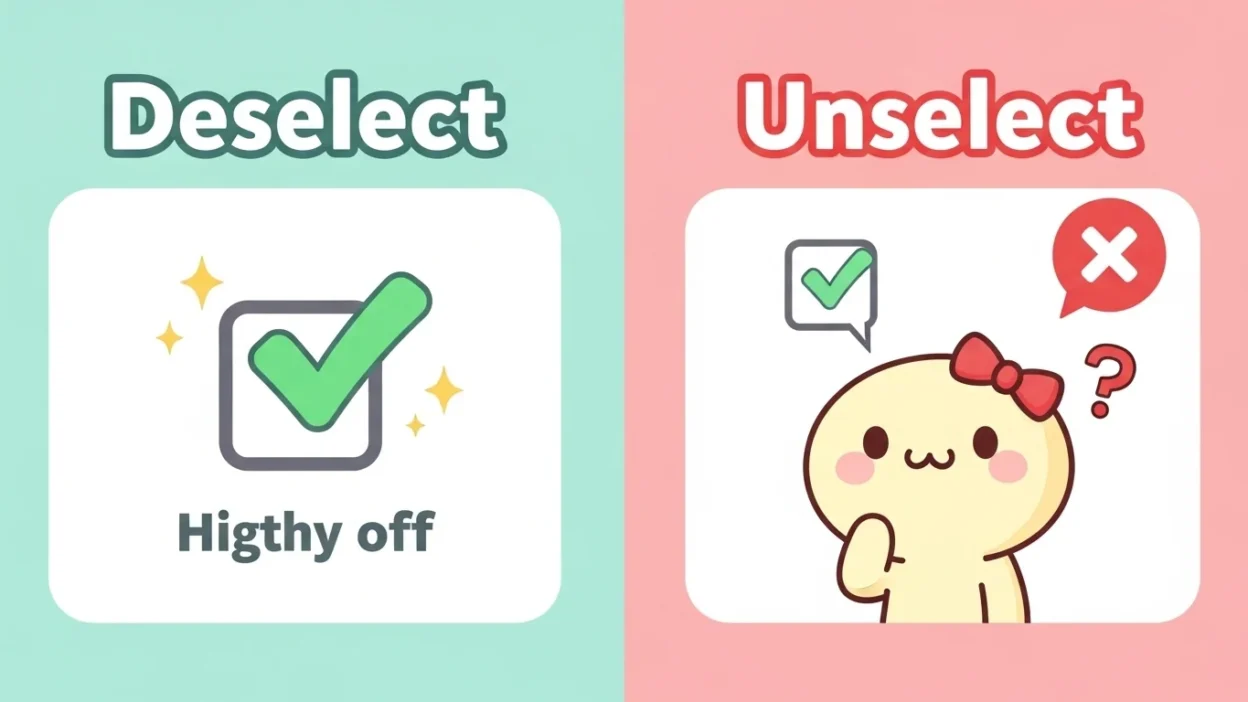
Many people hesitate between “unselect” and “deselect.” Although both may seem logical, only one fits standard usage in most contexts—especially in technology and UI language.
So, if you want clear and professional English, you need to pick the right word. In this guide, you’ll learn the difference, see real examples, and use the correct form with confidence.
Quick Answer
✨ Here’s the clear rule:
- ✅ “Deselect” = correct and widely used
- ⚠️ “Unselect” = rare and generally avoided
👉 Easy trick:
- De- = remove or reverse an action
🌟 Examples:
- Click to deselect the option. ✔
- Click to unselect the option. ⚠️ (less natural)
What Does “Deselect” Mean?
First of all, “deselect” means to remove a selection or cancel a chosen option. Therefore, it appears often in software, apps, and user interfaces.
Common Uses:
- Buttons and checkboxes
- Menus and settings
- Digital tools
Examples:
- Click the box again to deselect it.
- You can deselect multiple items.
- The user deselected the option.
👉 So, whenever you remove a selection, you should use “deselect.”
What About “Unselect”?
On the other hand, “unselect” exists, but people rarely use it in standard English. While it may sound correct, it does not appear as often as “deselect.”
👉 Because:
- English prefers “deselect” in technical contexts
- Most interfaces and software use “deselect”
Examples:
- You can unselect the option. (understandable but uncommon)
👉 So, you should avoid “unselect” in formal or professional writing.
Key Differences Between “Unselect” and “Deselect”
| Feature | Deselect | Unselect |
|---|---|---|
| Correctness | ✅ Preferred | ⚠️ Rare |
| Usage | Standard (especially tech) | Uncommon |
| Meaning | Remove selection | Same meaning |
| Example | Deselect the checkbox | Less used |
Common Mistakes to Avoid
Even though both words look similar, confusion still happens. So, let’s fix it:
❌ Less Natural:
- Please unselect the item.
✔ Better: Please deselect the item.
❌ In UI Writing:
- Unselect all options
✔ Better: Deselect all options
👉 So, always choose the standard term.
Easy Trick to Remember
Whenever you feel unsure, just remember:
- De- = remove or undo
- So, removing a selection = deselect
Because of this simple trick, you will choose correctly every time.
American vs British English
Interestingly, both American and British English prefer “deselect.” So, you’ll see it in apps, websites, and formal writing everywhere.
Real-Life Examples
In Technology:
- Click to deselect the image.
- Users can deselect items easily.
In Daily Use:
- He deselected the wrong option.
- She deselected all choices before submitting.
Why This Matters
Although this looks like a small word choice, it matters a lot. When you use the correct term:
- You sound more professional
- You match standard usage
- You improve clarity
As a result, your writing becomes more polished and modern.
FAQs
Which is correct: unselect or deselect?
“Deselect” is correct and widely preferred, while “unselect” is rare.
Can I use unselect in English?
Yes, but it sounds less natural, especially in formal or technical writing.
Why do apps use deselect?
Because “deselect” clearly follows standard English and sounds more professional.
Do both words mean the same?
Yes, both mean removing a selection, but usage differs.
Is deselect used in US and UK English?
Yes, both use “deselect” as the standard term.
What is the easiest way to remember this?
Think “de- means remove,” so removing a selection means deselect.
Final Thoughts
Now you clearly understand the difference between “unselect” and “deselect.”
While both carry the same meaning, “deselect” remains the correct and widely accepted choice. Because of this, you should always prefer it in writing.
As you continue practicing, you will naturally choose the correct word without hesitation. So, instead of guessing, you will write clearly and confidently every time.

Narelle Merindah is a passionate author committed to delivering thoughtful, engaging, and well-structured content. With a keen eye for detail and a love for storytelling, Narelle creates informative articles that resonate with readers. Her dedication to clarity, creativity, and authenticity ensures meaningful and impactful writing.