Many English learners wonder whether “do not” or “don’t” is correct. Since both forms appear in English conversations and writing, the choice can feel confusing. The good news is that both are correct—they simply fit different situations.
So, if you want natural and polished English, you need to know when to use the full form and when to use the contraction. In this guide, you’ll learn the differences, examples, and easy rules to remember.
Quick Answer
✨ Here’s the simple rule:
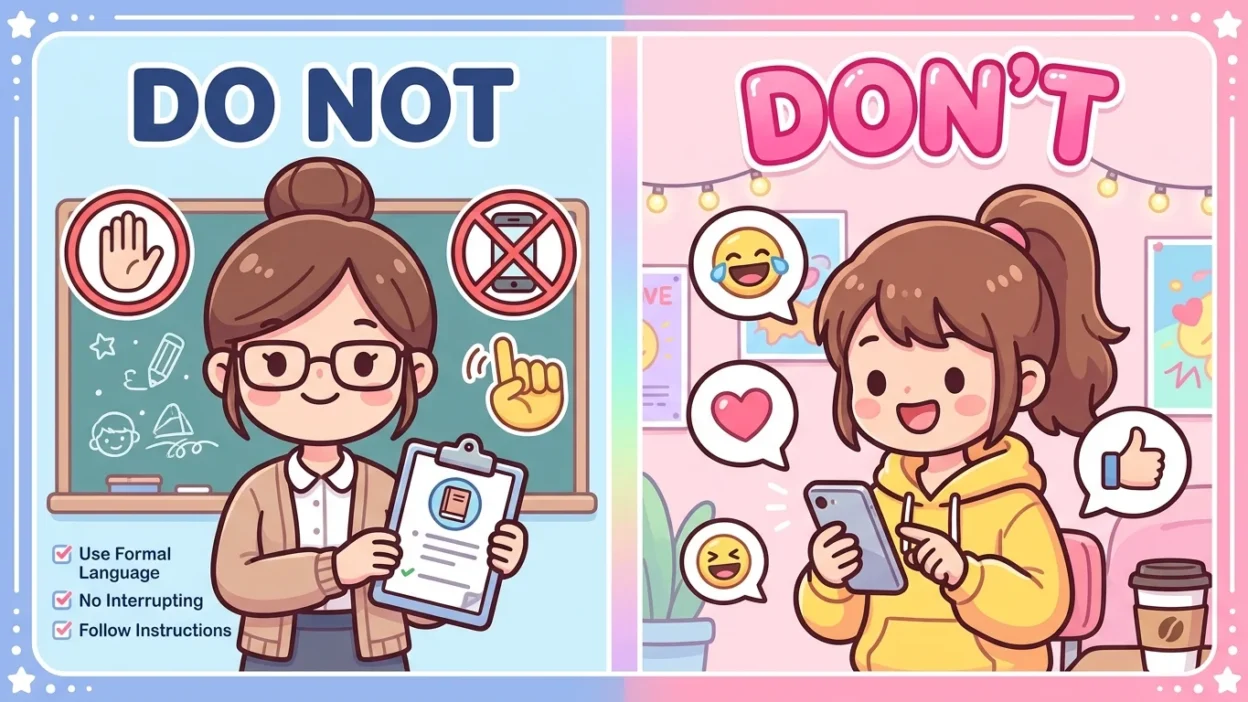
- ✅ Do not = formal and emphatic
- ✅ Don’t = informal and conversational
👉 Easy trick:
- Formal writing → do not
- Everyday speech → don’t
🌟 Examples:
- Do not enter this area. ✔
- Don’t worry about it. ✔
What Does “Do Not” Mean?
First of all, “do not” is the full form of the negative verb structure. Therefore, it often sounds more formal, serious, or emphatic.
Common Uses:
- Academic writing
- Official notices
- Formal instructions
- Strong emphasis
Examples:
- Do not touch the equipment.
- Students do not have access to this area.
- I do not agree with that decision.
👉 So, whenever you want a formal tone, use “do not.”
What Does “Don’t” Mean?
On the other hand, “don’t” is the contraction of “do not.” Therefore, it sounds more natural in everyday conversations.
Common Uses:
- Casual speech
- Text messages
- Blogs
- Informal writing
Examples:
- Don’t forget your keys.
- I don’t know the answer.
- They don’t live here anymore.
👉 So, in daily English, “don’t” usually sounds more natural.
Key Differences Between “Do Not” and “Don’t”
| Phrase | Tone | Usage |
|---|---|---|
| Do not | Formal, emphatic | Official and professional writing |
| Don’t | Informal, conversational | Everyday speech and writing |
Which One Sounds More Natural?
In modern English:
- ✅ Conversations → don’t
- ✅ Text messages → don’t
- ✅ Casual articles → don’t
- ✅ Formal documents → do not
Examples:
- Don’t be late. ✔
- Do not park here. ✔
👉 Therefore, the context determines the best choice.
Common Mistakes to Avoid
Even though both forms are correct, choosing the wrong tone can sound awkward.
❌ Too Formal:
- Do not worry, everything is fine.
✔ More Natural:
- Don’t worry, everything is fine.
❌ Too Casual:
- Don’t submit the application after the deadline.
✔ More Professional:
- Do not submit the application after the deadline.
👉 So, match the phrase to your audience.
Easy Trick to Remember
Whenever you feel unsure, remember:
- Talking → don’t
- Official writing → do not
👉 Think:
- Friend = don’t
- Sign or policy = do not
Because of this trick, you will choose correctly every time.
American vs British English
Interestingly, both American and British English use “do not” and “don’t” in the same way. Therefore, the difference depends on formality rather than region.
Real-Life Examples
Everyday Conversation:
- Don’t call me so late.
- I don’t like spicy food.
Formal Writing:
- Do not share your password.
- Do not remove this label.
Why This Matters
Although the meanings are identical, the tone changes noticeably. When you choose the right form:
- You sound more natural
- You match the situation better
- You improve readability
As a result, your English becomes more fluent and professional.
FAQs
Which is correct: do not or don’t?
Both are correct, but they suit different levels of formality.
Is don’t a real word?
Yes, it’s the standard contraction of “do not.”
When should I use do not?
Use it in formal writing, instructions, and official communication.
When should I use don’t?
Use it in conversations and informal writing.
Is do not stronger than don’t?
Yes, it often sounds more emphatic or serious.
What is the easiest way to remember this?
Use “don’t” for everyday English and “do not” for formal situations.
Final Thoughts
Now you clearly understand the difference between “do not” and “don’t.” While both forms mean exactly the same thing, “do not” sounds more formal and emphatic, whereas “don’t” sounds more natural in everyday communication.
As you continue improving your English, focus on matching the tone to the situation.
Therefore, instead of wondering which form is correct, you can confidently choose the one that fits your audience best.

Narelle Merindah is a passionate author committed to delivering thoughtful, engaging, and well-structured content. With a keen eye for detail and a love for storytelling, Narelle creates informative articles that resonate with readers. Her dedication to clarity, creativity, and authenticity ensures meaningful and impactful writing.