Propose and purpose look and sound somewhat similar, so English learners often mix them up. However, these two words have completely different meanings and grammatical roles. Therefore, understanding the difference can help you avoid a common spelling and vocabulary mistake.
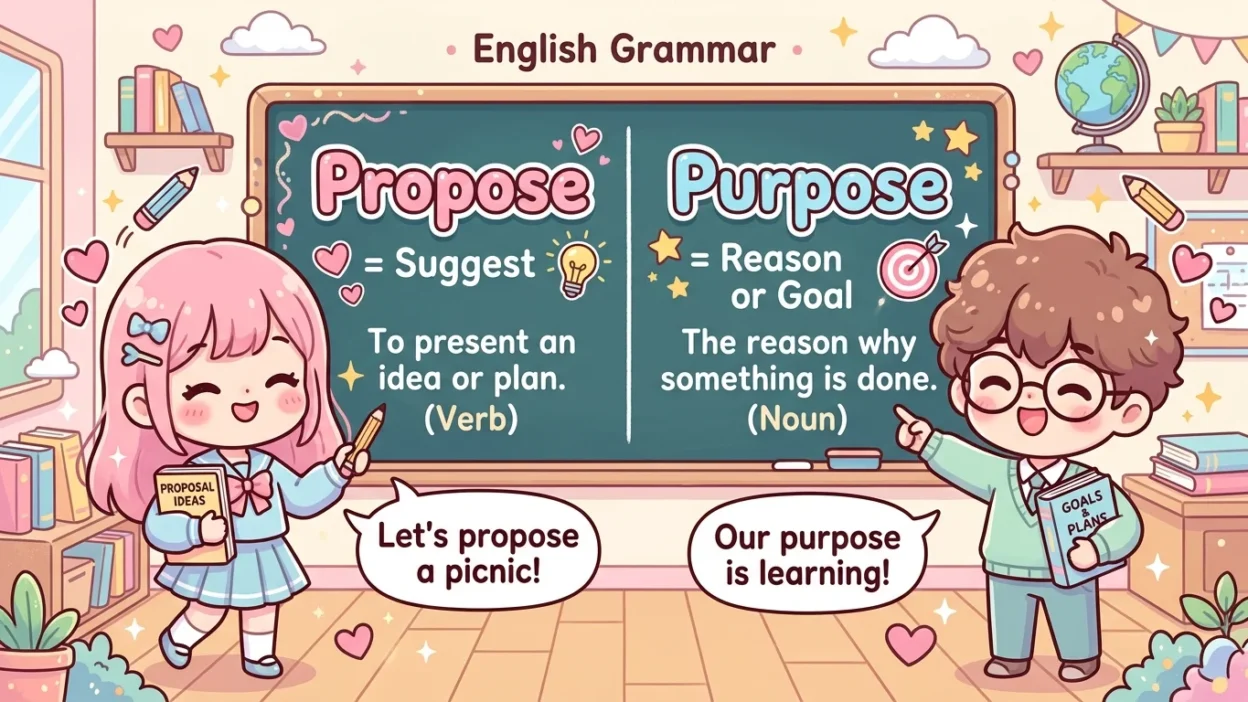
More specifically, propose usually works as a verb meaning to suggest an idea, plan, or action. It can also mean to ask someone to marry you. Meanwhile, purpose usually works as a noun meaning the reason for something or the goal someone wants to achieve. Consequently, you cannot normally replace one word with the other.
For example, you can propose a new plan, but you can discuss the purpose of the plan. Likewise, someone can propose marriage, while a person’s purpose describes their reason or goal. Once you understand these meanings, choosing the correct word becomes much easier.
Quick Answer
Propose is a verb meaning to suggest, present a plan, or ask someone to marry you. Purpose is mainly a noun meaning the reason, intention, or goal behind something. Therefore, use propose for an action and purpose for a reason or goal.
Why People Confuse Them
People confuse propose and purpose because their spelling and pronunciation look similar.
However, their meanings differ significantly.
- Propose = suggest or put forward an idea
- Propose = ask someone to marry you
- Purpose = reason for something
- Purpose = goal or intended result
For example:
- I propose a new solution. ✅
- The purpose of the solution is to save time. ✅
Therefore, although the words look related, they serve different purposes in a sentence.
Propose: Meaning and Definition
Propose usually functions as a verb.
It means to suggest or put forward an idea, plan, method, or action for consideration.
For example:
- She proposed a new strategy.
- He proposed several changes.
- They proposed a solution to the problem.
Additionally, propose can mean to ask someone to marry you.
For example:
- He proposed to his girlfriend.
- She proposed marriage during their trip.
Therefore, context determines which meaning of propose applies.
Common Forms of Propose
Because propose functions as a verb, you can use several forms:
- propose
- proposes
- proposed
- proposing
For example:
They propose a new plan.
She proposed a different approach.
He is proposing a solution.
Purpose: Meaning and Definition
Purpose usually functions as a noun.
It refers to the reason something exists, the intention behind an action, or the goal someone wants to achieve.
For example:
- What is the purpose of this meeting?
- The purpose of the exercise is to improve communication.
- She knows her purpose in life.
- The main purpose of this tool is to save time.
Therefore, when you want to describe a reason, intention, or goal, use purpose.
Purpose as a Verb
Although purpose mainly works as a noun, it can occasionally function as a verb in specific contexts. However, this usage is uncommon in everyday English.
For English learners, the most important distinction remains:
propose = verb
purpose = noun
Propose vs Purpose: Comparison Table
| Word | Part of Speech | Main Meaning | Example |
|---|---|---|---|
| Propose | Verb | Suggest or put forward an idea | She proposed a new plan. |
| Propose | Verb | Ask someone to marry you | He proposed to her. |
| Purpose | Noun | Reason or intention | What is the purpose of this meeting? |
| Purpose | Noun | Goal or intended result | The purpose is to improve safety. |
Consequently, the easiest distinction involves both meaning and part of speech.
When to Use Propose
Use propose when someone suggests or puts forward something.
1. Suggesting an Idea
I propose a different approach.
Here, propose means suggest.
2. Suggesting a Plan
The manager proposed a new schedule.
Here, the manager presented a schedule for consideration.
3. Suggesting a Solution
She proposed a solution to the problem.
Again, proposed means suggested.
4. Asking Someone to Marry You
He proposed to his partner last weekend.
Here, proposed means asked someone to marry him.
Therefore, propose usually describes an action involving a suggestion or marriage proposal.
When to Use Purpose
Use purpose when you discuss a reason, intention, or goal.
For example:
What is the purpose of this meeting?
Here, you are asking why the meeting exists.
Similarly:
The purpose of this exercise is to improve your writing.
Here, purpose describes the intended goal.
You can also use purpose when discussing someone’s personal goals:
She wants to find her purpose in life.
Therefore, whenever you can substitute reason, goal, or intention, purpose often fits.
Propose and Purpose in Sentences
Here are several examples that clearly show the difference:
- I propose a new solution.
- She proposed a different strategy.
- The committee proposed several changes.
- He proposed a new project.
- They proposed an alternative plan.
- He proposed to her during dinner.
- What is the purpose of this meeting?
- The purpose of this rule is to improve safety.
- The main purpose of the book is education.
- She understands the purpose of the exercise.
- The purpose of this device is to save energy.
- What is the purpose behind this decision?
- I propose that we begin tomorrow.
- The teacher proposed a new activity.
- The purpose of the activity is to build teamwork.
- He proposed several improvements to the system.
- The purpose of the changes is to reduce costs.
- She proposed an idea during the meeting.
Notice how propose describes something someone suggests, whereas purpose describes the reason or goal behind something.
Common Mistakes
Mistake 1: Using “Purpose” Instead of “Propose”
Incorrect:
I purpose a new idea. ❌
Correct:
I propose a new idea. ✅
Here, you need the verb propose because you are describing the act of suggesting an idea.
Mistake 2: Using “Propose” Instead of “Purpose”
Incorrect:
What is the propose of this meeting? ❌
Correct:
What is the purpose of this meeting? ✅
Here, you need the noun purpose because you are asking about the reason for the meeting.
Mistake 3: Confusing Marriage Usage
Correct:
He proposed to her. ✅
Not:
He purposed to her. ❌
When someone asks another person to marry them, the correct verb is propose.
Mistake 4: Confusing “Propose” With “Proposal”
These words connect in meaning but have different grammatical roles.
- propose = verb
- proposal = noun
For example:
She proposed a new plan.
She submitted a new proposal.
Therefore, do not automatically use purpose when you need proposal.
Memory Trick
Use this simple trick:
PROPOSE = PROPOSE an idea
PURPOSE = PURPOSE of something
Think of propose as an action.
Think of purpose as a reason or goal.
For example:
I propose a plan.
The purpose of the plan is to save money.
Therefore, remember:
Propose = suggest
Purpose = reason
This shortcut makes the difference much easier to remember.
American vs British English
Propose and purpose have the same basic meanings in standard American and British English.
In both varieties:
- propose means suggest or ask someone to marry you.
- purpose means reason, intention, or goal.
Therefore, this distinction does not change significantly between American and British English.
Similar Words
Propose vs Suggest
Both propose and suggest can mean presenting an idea for consideration.
She proposed a new plan.
She suggested a new plan.
However, propose can sound slightly more formal in some contexts.
Propose vs Recommend
Recommend means advise someone to choose or use something.
I recommend this book.
Meanwhile, propose means put forward an idea or plan.
I propose a new solution.
Purpose vs Reason
These words often overlap, but they do not always work identically.
Reason usually explains why something happened.
Purpose usually describes the intended reason, goal, or function behind something.
For example:
What was the reason for the delay?
What is the purpose of this meeting?
Purpose vs Goal
A goal usually refers to something someone wants to achieve.
A purpose can describe the broader reason or intention behind an action, activity, or existence.
Therefore, the words sometimes overlap, but they do not always carry exactly the same meaning.
Final Verdict
Propose and purpose are both correct English words, but they do completely different jobs.
Use propose when you mean suggest, put forward, or ask someone to marry you. Use purpose when you mean reason, intention, or goal.
Therefore, remember the simplest distinction:
Propose = suggest
Purpose = reason or goal
Remember This
I propose a new idea. ✅
The purpose of the idea is to solve the problem. ✅
He proposed to her. ✅
What is the purpose of this meeting? ✅
So, whenever you mean suggest, choose propose. Whenever you mean reason or goal, choose purpose.
FAQs
Is “propose” a verb or a noun?
Propose is primarily a verb. It means to suggest or put forward an idea, plan, or proposal. It can also mean to ask someone to marry you.
Is “purpose” a verb or a noun?
Purpose primarily functions as a noun. It means the reason, intention, or goal behind something.
What is the difference between propose and purpose?
Propose means to suggest or put forward something, while purpose means the reason or goal behind something. Therefore, the two words have different meanings and grammatical roles.
Is “I purpose a new idea” correct?
No, not when you mean “I suggest a new idea.” The correct sentence is “I propose a new idea.”
Is “What is the propose of this meeting?” correct?
No. The correct sentence is “What is the purpose of this meeting?” Here, purpose means the reason or goal of the meeting.
Can propose mean marriage?
Yes. Propose can mean to ask someone to marry you. For example, “He proposed to her last year.”
What is the easiest way to remember propose and purpose?
Remember “propose = suggest” and “purpose = reason or goal.” If you are putting an idea forward, use propose. If you are explaining why something exists or happens, use purpose.
Conclusion
Overall, propose and purpose may look similar, but their meanings differ clearly. Propose works primarily as a verb and describes suggesting an idea, presenting a plan, or asking someone to marry you. Meanwhile, purpose works primarily as a noun and describes a reason, intention, or goal.
Therefore, you can avoid the confusion by remembering one simple pair: propose = suggest and purpose = reason or goal. Once you connect each word with its core meaning, you can use both confidently in conversations, academic writing, emails, and professional communication.