Many learners hesitate between “emasculate” and “demasculate.” Although both may look logical, only one actually works in standard English. So, choosing the wrong form can make your writing sound incorrect or unnatural.
However, once you learn the rule, you’ll never mix them up again. In this guide, you’ll quickly understand the correct word, see clear examples, and avoid common mistakes with confidence.
Quick Answer
✨ Let’s make it clear and simple:
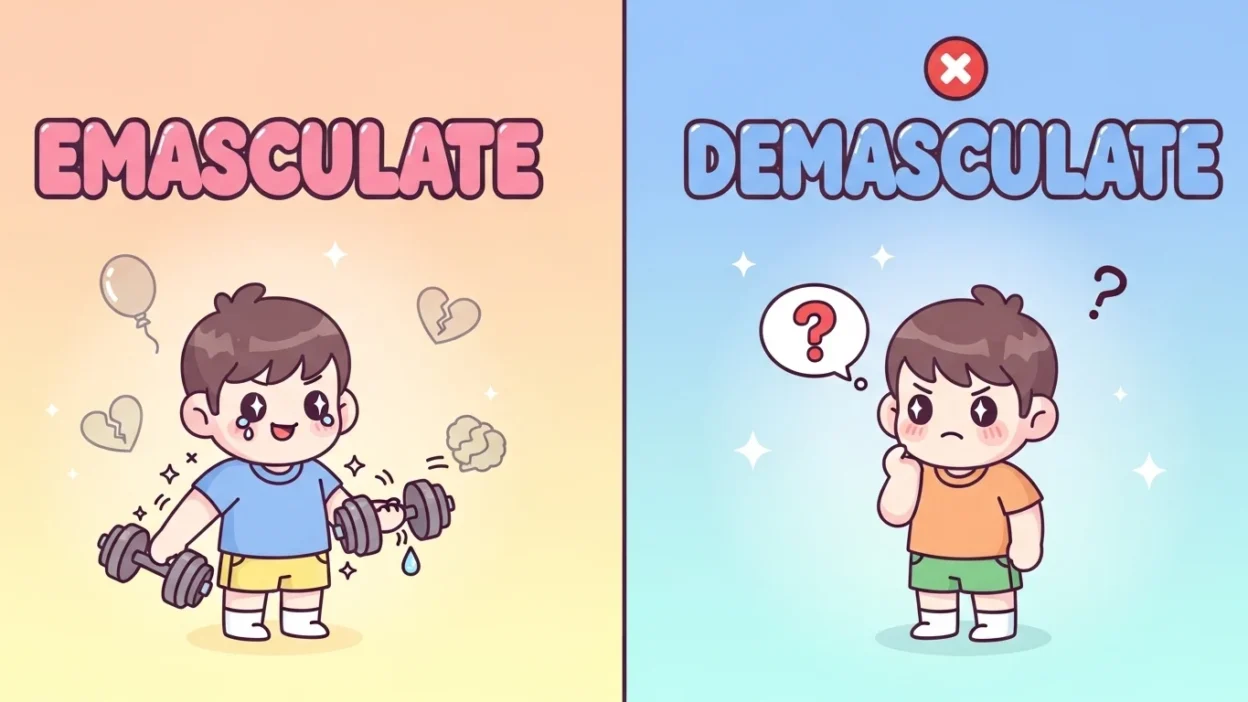
- ✅ “Emasculate” = correct word
- ❌ “Demasculate” = incorrect / not standard English
👉 Easy trick:
- English already uses “e-” in this word, so you don’t need “de-”
🌟 Example:
- The criticism seemed to emasculate him. ✔
- The criticism seemed to demasculate him. ❌
What Does “Emasculate” Mean?
First of all, “emasculate” means to weaken someone’s strength, confidence, or masculinity. Therefore, it usually appears in emotional or figurative contexts.
Common Uses:
- Emotional impact
- Loss of confidence
- Power or strength reduction
Examples:
- Harsh comments can emasculate a person.
- He felt emasculated by the situation.
- The defeat seemed to emasculate the team.
👉 So, whenever something reduces confidence or strength, you should use “emasculate.”
Why “Demasculate” Is Incorrect
On the other hand, “demasculate” is not accepted in standard English. Even though it looks logical, English does not use this form.
👉 Because:
- The word “emasculate” already carries the full meaning
- Adding “de-” creates a nonstandard or incorrect form
Comparison:
- Correct: Emasculate ✔
- Incorrect: Demasculate ❌
Key Difference Between “Emasculate” and “Demasculate”
| Feature | Emasculate | Demasculate |
|---|---|---|
| Correctness | ✅ Correct | ❌ Incorrect |
| Usage | Standard English | Not accepted |
| Meaning | Weakens confidence | Not valid |
| Example | He felt emasculated | ❌ Not used |
Common Mistakes to Avoid
Even though the rule is simple, people still make errors. So, let’s fix them:
❌ Incorrect:
- This situation will demasculate him.
✔ Correct: This situation will emasculate him.
❌ Incorrect:
- He felt demasculated.
✔ Correct: He felt emasculated.
👉 So, always stick with the standard form.
Easy Trick to Remember
Whenever you feel unsure, remember:
- English already has “emasculate”
- Therefore, you don’t need to add “de-”
👉 Think: E is enough!
Because of this trick, you will avoid this mistake easily.
American vs British English
Interestingly, both American and British English use “emasculate” as the correct word. So, you won’t find “demasculate” in proper usage in either variety.
- Emasculate ✔ (US & UK)
Real-Life Examples
In Daily Life:
- The criticism tried to emasculate him.
- He refused to feel emasculated.
In Social Context:
- Toxic comments can emasculate confidence.
- The failure did not emasculate his spirit.
Why This Matters
Although this looks like a small vocabulary issue, it matters a lot. When you choose the correct word:
- You avoid errors
- You sound more natural
- You improve credibility
As a result, your writing becomes clearer and more professional.
FAQs
Which is correct: emasculate or demasculate?
“Emasculate” is correct, while “demasculate” is not standard English.
Why is demasculate incorrect?
Because English already uses “emasculate,” so adding “de-” creates an unnecessary and incorrect form.
What does emasculate mean?
It means to weaken someone’s confidence, strength, or sense of masculinity.
Can demasculate ever be used?
No, standard English does not accept it.
Is emasculate used in both US and UK English?
Yes, both use it the same way.
What is the easiest way to remember this?
Remember “E is enough,” so you don’t add “de-.”
Final Thoughts
Now you clearly understand that “emasculate” is the correct word, while “demasculate” is incorrect.
Because of this simple rule, you can avoid a common vocabulary mistake and improve your writing instantly.
As you continue practicing, you will naturally choose the correct word without hesitation. So, instead of guessing, you will write clearly and confidently every time.

Lutana Maroochy is a creative author recognized for delivering engaging and well-researched content. With a passion for clear communication and storytelling, Lutana focuses on producing informative, reader-centered articles across various subjects. Dedicated to quality and originality, Lutana consistently connects with audiences through thoughtful insights and compelling narratives.