Many English learners confuse better than and better then because the words than and then look similar and sound alike in some accents. As a result, this mistake appears frequently in both writing and online conversations.
However, only one phrase is correct when making a comparison. So, if you want clear and grammatically correct English, you need to understand the difference between than and then.
Quick Answer
✨ Here’s the simple rule:
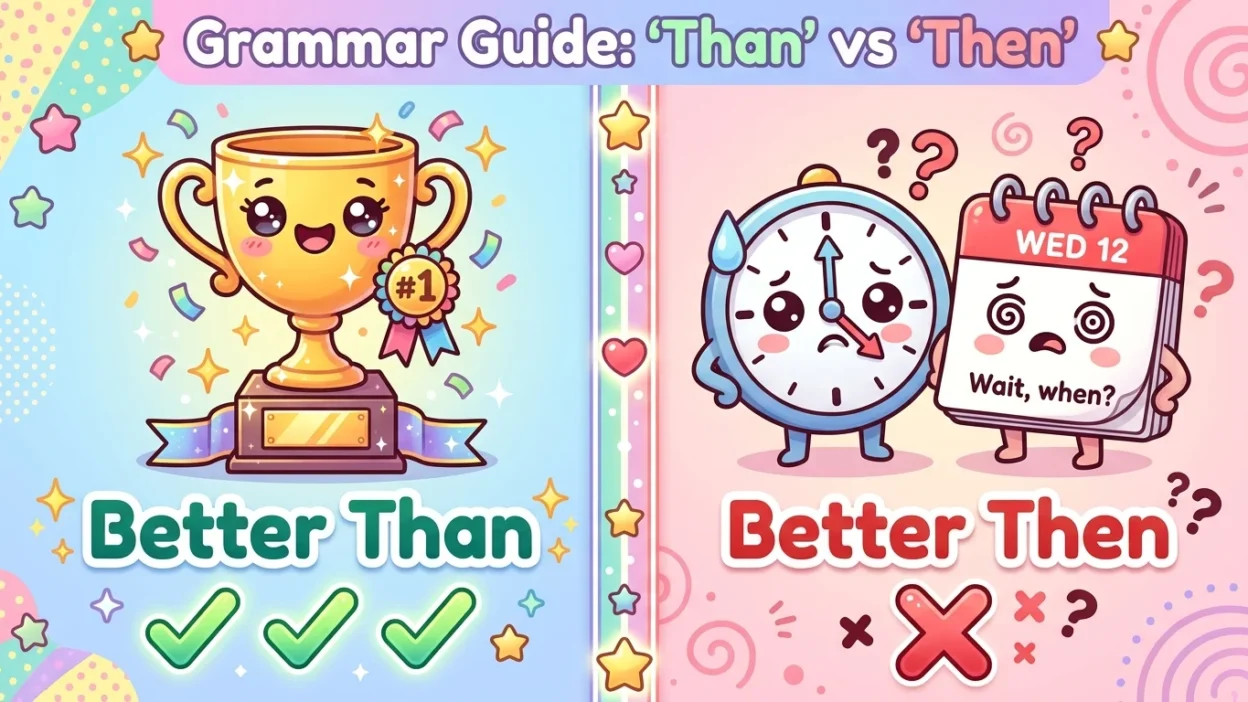
✅ Better than = correct for comparisons
❌ Better then = incorrect for comparisons
🌟 Easy way to remember:
- Than = comparison
- Then = time or sequence
Examples:
- She is better than me at tennis. ✔
- She is better then me at tennis. ❌
What Does Better Than Mean?
First of all, better than is the correct phrase when comparing two people, things, ideas, or situations.
Therefore, whenever you show that one thing is superior to another, use than.
Examples
- This phone is better than my old one.
- He sings better than his brother.
- Reading is better than scrolling endlessly online.
👉 As a result, better than is the standard comparison phrase in English.
What Does Then Mean?
On the other hand, then relates to time, order, or what happens next.
Therefore, it does not belong in most comparisons.
Examples
- Finish your homework, then watch TV.
- First we ate dinner, then we went home.
- Back then, life was very different.
👉 Consequently, then usually answers the question “when?” rather than “compared to what?”
Better Than vs Better Then: Key Differences
| Phrase | Correctness | Usage |
|---|---|---|
| Better than | ✅ Correct | Comparisons |
| Better then | ❌ Incorrect in comparisons | Time or sequence word used incorrectly |
Why Do People Confuse Them?
The confusion happens because:
- Than and then differ by only one letter.
- They sound similar in some accents.
- Autocorrect sometimes misses the mistake.
Examples
❌ This option is better then that one.
✅ This option is better than that one.
👉 Therefore, always check whether you’re making a comparison.
Common Mistakes to Avoid
❌ Incorrect
- My car is better then yours.
- Coffee tastes better then tea.
- This method is better then the old method.
✅ Correct
- My car is better than yours.
- Coffee tastes better than tea.
- This method is better than the old method.
👉 As a result, your writing will look much more polished.
Easy Trick to Remember
Whenever you feel unsure, remember:
🔹 Than = comparison
🔹 Then = time
Think:
- Bigger than
- Faster than
- Better than
But:
- First this, then that
- Back then
- And then
Because of this simple rule, you’ll rarely make this mistake again.
American vs British English
Interestingly, both American and British English follow the exact same rule.
Therefore:
✅ Better than
❌ Better then
No regional differences exist for this usage.
Real-Life Examples
Using Better Than
- This restaurant is better than the one nearby.
- She performed better than expected.
- Prevention is better than cure.
Using Then
- We finished lunch, then we left.
- Back then, smartphones didn’t exist.
- First study, then relax.
Why This Difference Matters
Although the words differ by only one letter, using the wrong one creates a noticeable grammar mistake.
When you use the correct word:
- Your writing becomes clearer.
- Your grammar improves.
- Your comparisons sound natural.
- Your communication feels more professional.
Therefore, mastering this distinction can instantly improve your English.
FAQs
Which is correct, better than or better then?
Better than is correct when making a comparison.
Why is better then wrong?
Because then refers to time or sequence, not comparison.
What is the difference between than and then?
Than compares things, while then refers to time or order.
Can better then ever be correct?
Only if then starts a separate idea about time, not a comparison.
Is this mistake common?
Yes. Many writers accidentally confuse than and then.
What is the easiest way to remember this?
Think: comparison = than, time = then.
Final Thoughts
Now you know that better than is the correct phrase for comparisons, while better then is usually a grammar mistake.
Since than introduces comparisons and then relates to time, choosing the right word becomes much easier once you understand their roles.
Therefore, whenever you compare two things, always use better than. By following this simple rule, your writing will sound more natural, accurate, and professional.