Many writers feel confused about Forgo vs Forego because of their similar spelling and pronunciation, despite having distinct meanings overall. From my experience editing grammar content, developing an understanding of the primary context for each word is the most crucial step when choosing the correct term. Although they appear alike, they are not interchangeable in every situation.
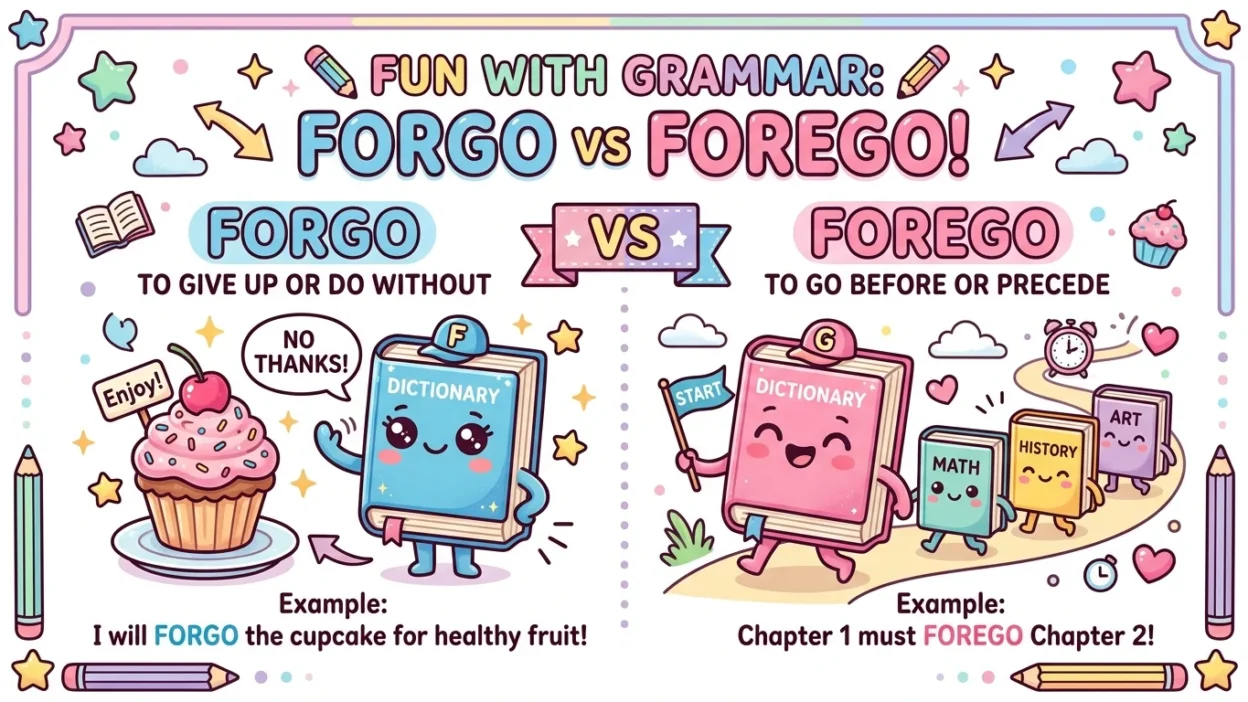
The word forego means to precede or go before something in place or time. It is often associated with succession and order, especially when discussing events that happen one after another. In contrast, forgo means to abstain, live without, or renounce something voluntarily. This meaning is commonly used when talking about the act of giving something up.
When comparing the two terms, the meaning depends entirely on the circumstances. If something comes before another thing, forego is usually the right choice. If someone decides to do without a benefit, opportunity, or possession, forgo is the better option. Keeping these differences in mind makes it easier to understand their unique uses and avoid common mistakes.
Quick Answer
- Forgo means to do without something, give something up, abstain, or renounce.
- Forego means to go before, precede, or come earlier in time or order.
Quick Examples
- She decided to forgo dessert to maintain her diet.
- The introduction will forego the main discussion.
While both words are correct, they are used in completely different situations.
Why Are Forgo and Forego Confusing?
The confusion comes from their nearly identical spelling and pronunciation. Many people assume they are simply alternative spellings of the same word, but that is not the case.
Historically, the two words developed separate meanings. Today, forgo is far more common in everyday writing, while forego appears less frequently and is often found in formal or literary contexts.
A useful way to remember them is:
- Forgo = Give up.
- Forego = Go before.
What Does Forgo Mean?
Forgo means to voluntarily give something up, abstain from it, or choose not to have it.
You may forgo an opportunity, a benefit, a reward, or even a personal preference if you decide it is not necessary or desirable.
Examples of Forgo
- He chose to forgo his annual bonus.
- We decided to forgo the expensive package.
- She was willing to forgo comfort to achieve her goal.
- Many travelers forgo luxury accommodations to save money.
Synonyms of Forgo
- Give up
- Renounce
- Abstain from
- Sacrifice
- Relinquish
- Do without
In most modern writing, this is the version people use most often.
What Does Forego Mean?
Forego means to come before something else in place, time, sequence, or order. It refers to something that precedes another thing.
Because it is less common in everyday conversation, many readers mistakenly think it is a misspelling of forgo.
Examples of Forego
- The foregone events shaped the outcome.
- The chapters that forego this section provide important background.
- Several announcements forego the main presentation.
- The forego discussion helps establish context.
Synonyms of Forego
- Precede
- Come before
- Lead
- Antedate
- Go ahead of
When used correctly, forego focuses on sequence and order rather than sacrifice.
Forgo vs Forego: Side-by-Side Comparison
| Word | Meaning | Common Use | Example |
|---|---|---|---|
| Forgo | To do without or give up | Everyday writing | She decided to forgo dessert. |
| Forego | To precede or come before | Formal or literary writing | The forego chapter explains the topic. |
How to Remember the Difference
Simple memory tricks often work best.
Forgo = Give Up
Think of forgo as refusing or sacrificing something.
Example:
- Forgo the reward.
- Forgo the opportunity.
- Forgo the benefit.
Forego = Before
Think of the word fore in expressions such as “foreword” or “forefront,” both of which involve something that comes before.
Example:
- The forego section comes before the conclusion.
- Earlier events forego later developments.
Common Mistakes People Make
Many grammar mistakes happen because writers use the more familiar spelling without considering the meaning.
Mistake 1
❌ We decided to forego dessert.
✅ We decided to forgo dessert.
Here, the meaning is giving something up, so forgo is correct.
Mistake 2
❌ The introduction forgoes the main chapter.
✅ The introduction foregoes the main chapter.
Here, the meaning is coming before something, so forego is the correct choice.
Mistake 3
❌ She forewent the reward.
✅ She forwent the reward.
The verb forms can create additional confusion, making it important to check the intended meaning carefully.
Forgo and Forego in Everyday Writing
In modern English, most people encounter forgo much more frequently than forego.
For example:
- Forgoing a promotion
- Forgoing dessert
- Forgoing unnecessary expenses
- Forgoing certain privileges
Meanwhile, forego is often limited to discussions involving sequence, chronology, historical events, or formal writing.
Because of this difference in frequency, many readers instinctively assume every occurrence should be forgo, even when forego is actually correct.
American vs British English
Unlike some commonly confused words, there is no significant American versus British English difference between forgo and forego.
Both American English and British English recognize the same meanings and spellings.
The only notable difference is frequency. In both varieties of English:
- Forgo is considerably more common.
- Forego is relatively rare.
As a result, many speakers in both countries are more familiar with forgo.
When Should You Use Forgo?
Choose forgo when talking about:
- Giving something up
- Declining an opportunity
- Sacrificing a benefit
- Abstaining from something
- Living without something
Examples:
- Forgo dessert
- Forgo a vacation
- Forgo a bonus
- Forgo a privilege
When Should You Use Forego?
Choose forego when talking about:
- Coming before
- Preceding another event
- Sequence
- Order
- Earlier occurrences
Examples:
- Forego the final chapter
- Forego later developments
- Forego the discussion
- Forego subsequent events
Real-Life Examples
Imagine two different situations.
A student decides to skip a social event to study for an important exam. In this case, the student chooses to forgo the event.
Now imagine a history book where one chapter comes before another. The earlier chapter may forego the next section in the sequence.
Although the words look almost identical, their meanings are entirely different.
FAQs
What is the difference between forgo and forego?
Forgo means to give something up or do without it, while forego means to come before something in time or order.
Which word is more common?
Forgo is significantly more common in modern English and appears more frequently in everyday writing.
Is forego an old-fashioned word?
Not exactly, but it is less common today and is often found in formal, literary, or historical contexts.
Can forgo and forego be used interchangeably?
No. Although they look similar, they have different meanings and should not be substituted for one another.
What are some synonyms for forgo?
Common synonyms include relinquish, sacrifice, abstain from, renounce, and give up.
What are some synonyms for forego?
Common synonyms include precede, come before, lead, and go ahead of.
Is there a British spelling difference?
No. Both American and British English use the same spellings and meanings.
How can I remember the difference?
Remember: forgo = give up, forego = go before.
Final Thoughts
Understanding Forgo vs Forego is easier once you focus on the core meaning of each word. Forgo relates to sacrifice, abstinence, and choosing to do without something. Forego relates to sequence, order, and things that come before something else. Even though they differ by only one letter, they belong in completely different contexts.
As someone who regularly reviews grammar-related content, I’ve noticed that many writers automatically choose forgo because it appears more often in modern English.
Taking a moment to identify whether you’re discussing sacrifice or sequence can prevent mistakes and improve the clarity of your writing. The more examples you read and use, the more natural the distinction becomes.

Narelle Merindah is a passionate author committed to delivering thoughtful, engaging, and well-structured content. With a keen eye for detail and a love for storytelling, Narelle creates informative articles that resonate with readers. Her dedication to clarity, creativity, and authenticity ensures meaningful and impactful writing.