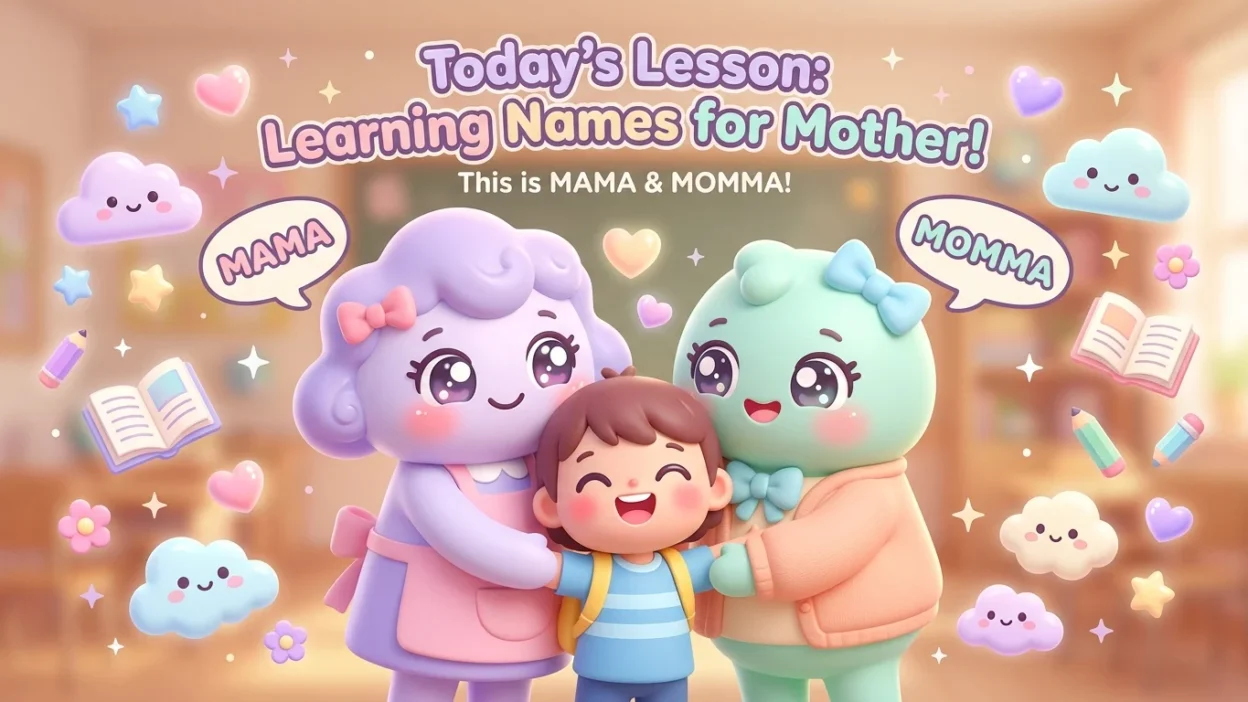
Momma and mama are both affectionate, informal words for mother, but they are not always used in exactly the same way. The best choice often depends on family preference, regional usage, and personal style rather than a strict grammar rule.
If you are writing dialogue, a card, a social media caption, or a personal message, both can sound warm and natural. However, mama is generally the more widely used and versatile form, while momma often has a more distinctly informal, conversational, or affectionate feel.
Quick Answer
Both mama and momma are correct informal words for mother. Mama is widely used as an affectionate name or form of address, while momma is a more conversational variation, especially associated with mom in American English. Your family or regional preference often decides which sounds most natural.
Why People Confuse It
The words are extremely similar in spelling, pronunciation, and meaning. Both are affectionate alternatives to more formal words such as mother.
The main difference is the vowel and the feeling of the word:
- Mama → often universal, simple, and childlike
- Momma → often connected to mom and especially familiar in American English
Because both forms appear in everyday speech, songs, books, and family conversations, there is no single universal rule requiring one spelling in every situation.
Mama: Meaning and Definition
Mama is an informal and affectionate word for mother. Young children often use it as one of their earliest names for a parent.
It can also be used as:
- A direct form of address
- A loving family nickname
- A casual alternative to mother
- An affectionate reference to someone’s maternal role
Examples of “Mama”
- Mama, can you help me?
- I love my mama.
- Her little boy called for his mama.
- Happy birthday, Mama!
- My mama always gives me good advice.
Mama is common in many English-speaking communities and cultures.
Momma: Meaning and Definition
Momma is also an informal and affectionate word for mother. It is closely connected to the American English word mom.
It often appears in warm, conversational, or childlike language.
Examples of “Momma”
- Momma, look what I made!
- I need to call my momma.
- His momma picked him up from school.
- Thank you for everything, Momma.
- The child ran to his momma.
Momma can feel especially personal and familiar, although its exact tone varies by speaker and region.
Momma vs Mama: Comparison Table
| Feature | Momma | Mama |
|---|---|---|
| Meaning | Informal, affectionate word for mother | Informal, affectionate word for mother |
| Common association | Mom, especially American English | Widely used across many varieties of English |
| Tone | Familiar and conversational | Warm, affectionate, and childlike |
| Formal writing | Usually avoid | Usually avoid unless used as a name |
| Example | I love you, Momma. | I love you, Mama. |
When to Use Each
Use “Mama” When You Want a Warm, Widely Recognized Term
Mama works well for:
- Family conversations
- Cards and messages
- Children’s language
- Loving captions
- Dialogue
- Personal nicknames
Examples:
- I miss you, Mama.
- Thank you, Mama, for everything.
- The baby called for her mama.
Use “Momma” When It Matches Your Family’s Natural Way of Speaking
Choose momma when that is the spelling or pronunciation your family uses.
Examples:
- I love you, Momma!
- My momma taught me to be kind.
- Momma, wait for me!
There is nothing grammatically wrong with either word. Personal and regional preference matters.
Examples
Here are 12 examples showing both words naturally:
- Mama, I have something to tell you.
- I called my mama last night.
- Momma, can you come here?
- His momma made his favorite meal.
- Happy Mother’s Day, Mama!
- Thank you for always supporting me, Momma.
- The little girl hugged her mama.
- The baby reached for his momma.
- I learned so much from my mama.
- Her momma was waiting outside.
- I love you more than words can say, Mama.
- No matter how old I get, I’ll always need my momma.
Common Mistakes
Mistake 1: Thinking One Is Always Correct and the Other Is Always Wrong
❌ Only mama is correct.
❌ Only momma is correct.
✔ Both are recognized informal forms for mother.
The best choice depends on context and personal usage.
Mistake 2: Using Them in Highly Formal Writing Without Context
In formal writing, mother is usually more appropriate.
Informal:
- My mama gave me advice.
- My momma gave me advice.
Formal:
- My mother gave me advice.
Mistake 3: Changing Someone’s Preferred Family Name
If a person calls their mother Mama or Momma, it is usually best to respect that spelling in personal writing.
Mistake 4: Confusing “Mama” With “Mamma”
Mamma is another spelling that appears in some varieties of English, particularly British usage and older writing. However, mama and momma are the forms most relevant in this comparison.
Memory Trick
Think about the shorter family words:
🌸 Mom → Momma
💖 Ma → Mama
This is not a strict grammar formula, but it can help you remember the common spelling patterns.
Another easy reminder:
MAMA = MA + MA
MOMMA = MOM + MA
Both lead to an affectionate word for mother.
American vs British English
In American English, mom is the common everyday term, so momma may feel especially familiar and natural in some families. Mama is also widely used.
In British English, mum is more common than mom, so momma may sound more distinctly American. Mama can still be understood and used affectionately, while mamma may also appear.
The most important point is that mama and momma are personal, informal family words, so usage can vary significantly.
Similar Words
Mama vs Mother
- Mama = affectionate and informal
- Mother = neutral or formal
Example:
- I love you, Mama!
- Her mother arrived early.
Momma vs Mom
- Momma = often more affectionate or childlike
- Mom = common everyday American English
Mama vs Mommy
- Mama = simple, warm, and widely used
- Mommy = often more childlike
Both can be affectionate.
Momma vs Mamma
These are spelling variations used in different families and varieties of English. Momma is especially associated with American English, while mamma may appear more often in British or traditional usage.
Mama vs Ma
- Mama = affectionate and often childlike
- Ma = shorter and more casual
Final Verdict
Both momma and mama are correct when used as informal, affectionate names for a mother.
Choose mama if you want a widely recognized, warm, and versatile term. Choose momma if that matches your family’s natural pronunciation, spelling, or affectionate style—particularly in American English.
There is no grammar rule saying one is universally better. When writing personally, the spelling your mother or family actually prefers is often the best choice.
Remember This
💕 Mama = warm and widely used.
🌷 Momma = affectionate and often linked to American “mom.”
Neither is automatically wrong.
When writing about your own family, use the form that sounds most natural to you and your family.
FAQs
1. Is “momma” a correct spelling?
Yes. Momma is a correct informal and affectionate spelling for mother.
2. Is “mama” a correct spelling?
Yes. Mama is also a correct and widely used affectionate word for mother.
3. Which is more common: mama or momma?
This depends on region, family, and personal preference. Mama is broadly recognized across English varieties, while momma is especially associated with American English.
4. Is “momma” more affectionate than “mama”?
Not necessarily. Both can be deeply affectionate. The emotional tone depends more on the speaker, family, and context than the spelling itself.
5. Is “momma” American English?
Momma is particularly associated with American English because of its connection with mom, although individual usage varies.
6. What is the British English equivalent of “momma”?
There is no exact one-to-one equivalent. Mum is the common everyday British English word, while mummy, mama, or mamma may be used affectionately depending on the family and region.
7. Should I capitalize “Mama” or “Momma”?
Capitalize Mama or Momma when using it as a name or direct form of address:
- Thanks, Mama!
- I love you, Momma.
Use lowercase when referring to a mother generally:
- She called her mama.
- He hugged his momma.
Conclusion
The choice between momma vs mama is less about strict grammar and more about usage, tone, region, and family preference. Both words are correct informal ways to refer to a mother and can express warmth, love, and familiarity.
If you want a broadly recognized term, mama is an excellent choice. If momma reflects the way your family naturally speaks, it is equally valid. In personal messages, cards, and affectionate writing, the most meaningful choice is usually the one that feels most natural to the person you are talking about.

Lutana Maroochy is a creative author recognized for delivering engaging and well-researched content. With a passion for clear communication and storytelling, Lutana focuses on producing informative, reader-centered articles across various subjects. Dedicated to quality and originality, Lutana consistently connects with audiences through thoughtful insights and compelling narratives.