Many English learners confuse “she has” and “she have.” Since both phrases use the verb “have,” people sometimes struggle to choose the correct form. However, English grammar follows a very clear rule here.
So, if you want natural and grammatically correct English, you need to know which verb matches the subject. In this guide, you’ll learn the difference, examples, and easy tricks to avoid mistakes confidently.
Quick Answer
✨ Here’s the simple rule:
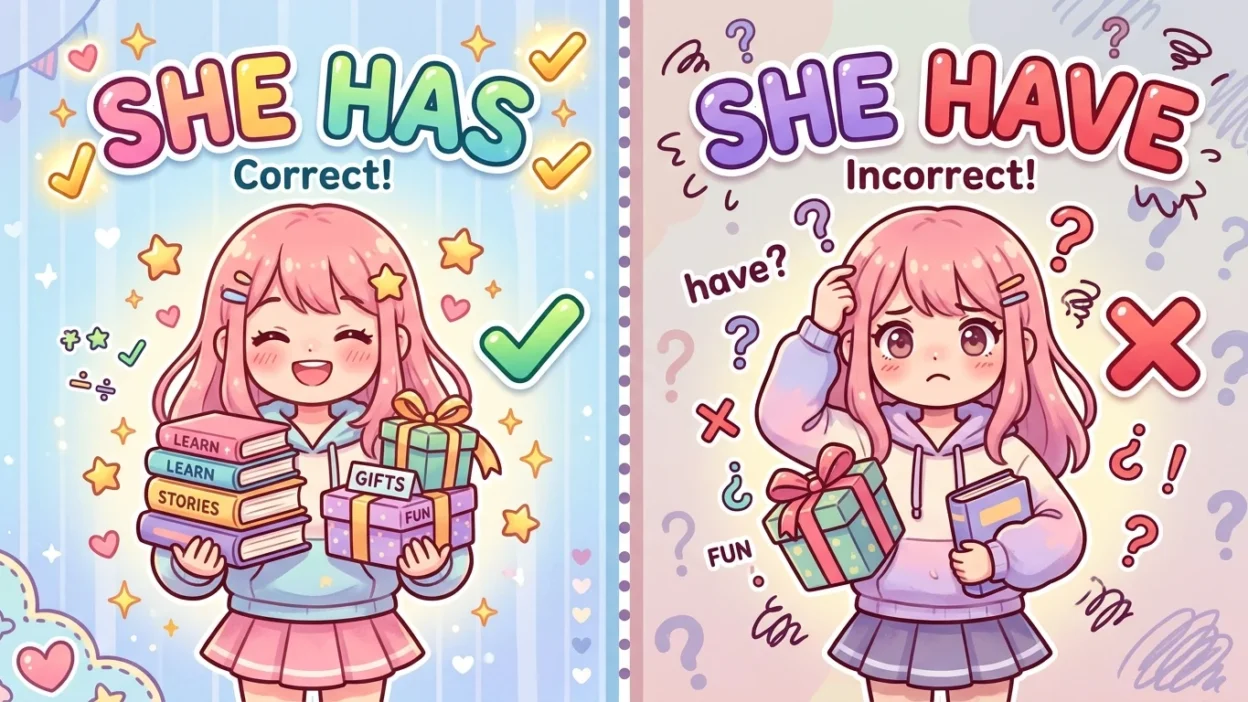
- ✅ She has = correct
- ❌ She have = incorrect in standard English
👉 Easy trick:
- Singular subjects like he, she, it use has
🌟 Examples:
- She has a new phone. ✔
- She have a new phone. ❌
Why “She Has” Is Correct
First of all, “she” is a singular subject. Therefore, English grammar uses “has” with singular third-person subjects.
Common Singular Subjects:
- He
- She
- It
Examples:
- She has a beautiful house.
- He has a busy schedule.
- It has a long tail.
👉 So, whenever you use she, choose “has.”
Why “She Have” Is Incorrect
On the other hand, “have” works with plural subjects and certain pronouns, not with “she.”
Correct Uses of “Have”:
- I have
- You have
- We have
- They have
Examples:
- They have enough time.
- We have good teachers.
👉 Because “she” is singular, “she have” sounds grammatically wrong.
Key Differences Between “She Has” and “She Have”
| Phrase | Correctness | Usage |
|---|---|---|
| She has | ✅ Correct | Singular subject |
| She have | ❌ Incorrect | Wrong verb agreement |
Common Mistakes to Avoid
Even though the rule is simple, many learners still make mistakes. So, let’s fix them:
❌ Incorrect:
- She have two sisters.
✔ Correct: She has two sisters.
❌ Incorrect:
- She have finished her work.
✔ Correct: She has finished her work.
👉 So, always match singular subjects with “has.”
Easy Trick to Remember
Whenever you feel unsure, remember:
- He / She / It → Has
- I / You / We / They → Have
Because of this trick, you will avoid mistakes instantly.
American vs British English
Interestingly, both American and British English follow the exact same grammar rule. So, “she has” remains correct everywhere.
Real-Life Examples
In Daily Conversation:
- She has a friendly personality.
- She has many hobbies.
In School or Work:
- She has completed the project.
- She has excellent grades.
Why This Matters
Although this looks like a tiny grammar detail, subject-verb agreement is very important. When you use the correct form:
- You sound more natural
- You improve grammar accuracy
- You avoid basic mistakes
As a result, your English becomes smoother and more professional.
FAQs
Which is correct: she has or she have?
“She has” is correct in standard English.
Why is she have incorrect?
Because “she” is singular and needs the verb “has.”
When do we use have?
Use “have” with I, you, we, and they.
Is she have ever acceptable?
Only in very informal dialects, not in standard English.
Is this rule the same in US and UK English?
Yes, both follow the same grammar rule.
What is the easiest way to remember this?
He, she, and it always use “has.”
Final Thoughts
Now you clearly understand that “she has” is the correct form, while “she have” is incorrect in standard English.
Because of this simple grammar rule, you can avoid one of the most common beginner mistakes easily.
As you continue practicing, you will naturally choose the correct verb form without hesitation. So, instead of guessing, you will speak and write clearly every time.