Many English learners confuse “spatter” and “splatter” because both words describe liquid spreading in small drops. Since the meanings feel very close, choosing the correct word can seem difficult.
However, these words carry slightly different shades of meaning. So, if you want more natural and precise English, you should understand when each word works best. In this guide, you’ll learn the meanings, examples, and easy tricks to remember the difference.
Quick Answer
✨ Here’s the simple rule:
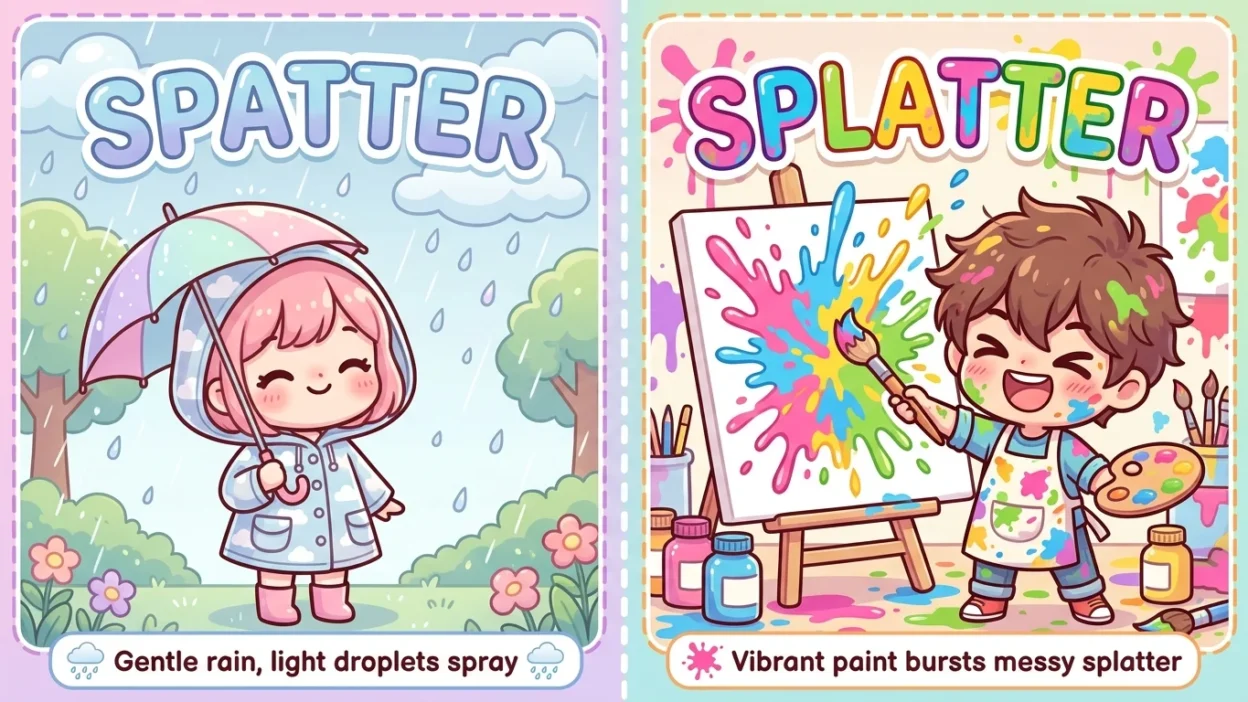
- ✅ Spatter = small scattered drops
- ✅ Splatter = larger, messier spreading of liquid
👉 Easy trick:
- Spatter = lighter mess
- Splatter = bigger mess
🌟 Examples:
- Rain spattered the window. ✔
- Paint splattered across the wall. ✔
What Does “Spatter” Mean?
First of all, “spatter” means to scatter small drops lightly across a surface. Therefore, it usually suggests a smaller or gentler spread.
Common Uses:
- Rain
- Mud
- Tiny drops
Examples:
- Mud spattered her shoes.
- Rain spattered the glass softly.
- Tiny drops spattered the floor.
👉 So, “spatter” often describes lighter or finer drops.
What Does “Splatter” Mean?
On the other hand, “splatter” means liquid spreads messily and forcefully over an area. Therefore, it usually sounds more dramatic or chaotic.
Common Uses:
- Paint
- Sauce
- Big messy spills
Examples:
- Paint splattered everywhere.
- The sauce splattered onto the stove.
- Water splattered across the floor.
👉 So, “splatter” usually creates a stronger image of mess.
Key Differences Between “Spatter” and “Splatter”
| Word | Meaning | Intensity |
|---|---|---|
| Spatter | Small scattered drops | Lighter |
| Splatter | Messy forceful spreading | Stronger |
Common Mistakes to Avoid
Even though the words overlap slightly, choosing the wrong one can change the tone. So, let’s simplify it:
⚠ Less Natural:
- The tiny rain splattered softly on the leaves.
✔ Better: The tiny rain spattered softly on the leaves.
⚠ Less Precise:
- The exploding paint spattered everywhere.
✔ Better: The exploding paint splattered everywhere.
👉 So, match the word to the intensity of the mess.
Easy Trick to Remember
Whenever you feel unsure, remember:
- Spatter = small spray
- Splatter = big splash
Because of this trick, you will remember the difference more easily.
American vs British English
Interestingly, both American and British English use “spatter” and “splatter” similarly. However, “splatter” appears more often in movies, art, and dramatic descriptions.
Real-Life Examples
In Nature:
- Rain spattered the pavement.
- Mud spattered the car doors.
In Cooking or Art:
- Oil splattered from the frying pan.
- Bright paint splattered across the canvas.
Why This Matters
Although these words look and sound similar, the tiny difference changes imagery and tone. When you choose the correct word:
- You sound more precise
- You improve descriptions
- You create clearer imagery
As a result, your English becomes richer and more expressive.
FAQs
Which is correct: spatter or splatter?
Both are correct, but they describe different levels of spreading liquid.
What does spatter mean?
It means small drops scatter lightly.
What does splatter mean?
It means liquid spreads messily or forcefully.
Which word sounds messier?
“Splatter” sounds messier and more dramatic.
Can the words replace each other?
Sometimes, but the tone changes slightly.
What is the easiest way to remember this?
Spatter is small, while splatter is bigger and messier.
Final Thoughts
Now you clearly understand the difference between “spatter” and “splatter.” While “spatter” describes lighter scattered drops, “splatter” creates a stronger image of messy spreading. Because of this subtle distinction, you can describe actions more naturally and accurately.
As you continue practicing, you will naturally choose the best word based on context and intensity. So, instead of guessing, you will write clearly and confidently every time.